





Back inside Ed’s memory circle, Maura is thanking the memory circlers for their support of her during her transition, and explaining how she first knew when she was a little girl. Shelly peaces out, possibly to check on the mustard situation.
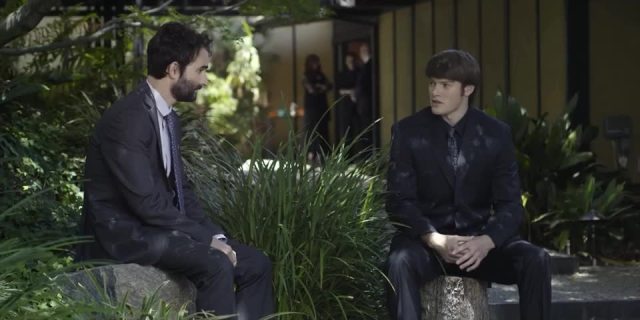
Over in Josh’s private hell, he’s trying to make friends with Colton. Colton is from Overland Park, an affluent suburb of Kansas City, where I am presuming he was adopted and then later got in touch with Rita in LA? He’s about to be a senior, and he really likes sushi. That’s it; that’s all of Colton. I don’t think he’s going to get what he wanted out of this visit to LA but at the very least they probably do have better sushi than in Kansas. Josh says the timing of this is terrible, “because I’m really fucked up right now.” He then amends it to “I’m fucked up all the time,” which is true. Colton optimistically opines “No matter what happens, I’m always going to like you, you know?” WE’LL SEE ABOUT THAT, YOUNG MAN.
As this uncomfortable conversation is drawing to a close, yet another one is blossoming: Ali has found her mother and is demanding to know why she didn’t have a bat mitzvah. An alternate title for this episode could have been “Is Now Really the Time?” Shelly explains about Maura wanting to go to Camp Camellia, possibly because she’s annoyed at Maura right now for talking about her transition and not Ed. (What happened to Shelly’s emotional declarations that Maura is the only one who was there for her?) Ali is filled with a passionate anger that for some reason she has never felt the need to visit upon any other characters in this show who make truly awful decisions, and goes to confront Maura.
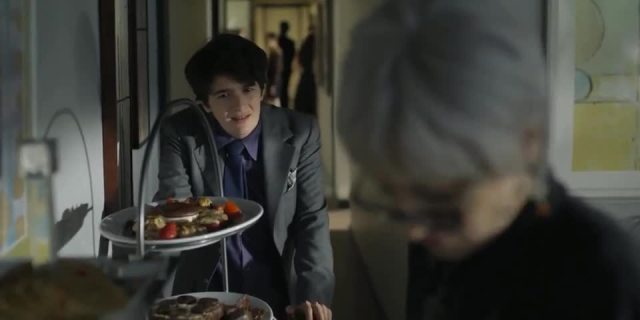
Ali stomps into the circle of women talking about Barbara Kingsolver and says “So, Mom tells me that you canceled my bat mitzvah so that you could go to some dress-up camp in the woods?” Maura explains that she actually just let Ali cancel it, and Ali says she shouldn’t have been allowed to because she was 13. That’s the worst, when your parents decide to not force you to perform an extremely public act that you’ve explicitly told them you don’t want to do! Someone call CPS. I regret not keeping a list from the very beginning of this show of Things These Kids Think They’re Entitled To.
Maura says “Don’t be so self-centered. There’s another world out there,” which should probably be the tagline for the whole show. Ali argues that Maura is actually the one who’s self-centered, and that Maura, personally, has denied Ali the chance to practice Judaism. Kids! You gotta love ’em.

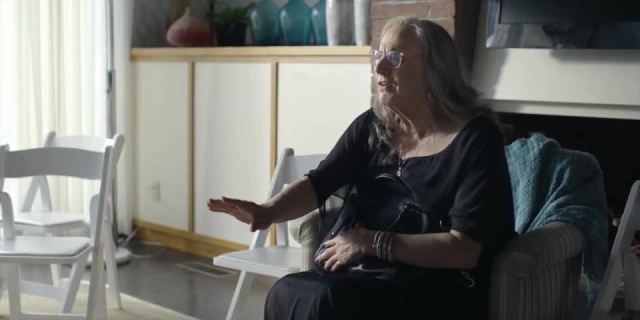
Ali’s other main complaint is that Maura has given her too much money, which is truly incredible. I really wish Bianca was here for this scene so we could get a reaction shot. Maura’s response is pretty good too, though.
Because, my beautiful girl, you cannot do anything! You know, you have so much more to say now than when I was writing your checks. Giving you loans which, by the way, aren’t actually loans. Because you don’t pay back dick. You understand? Not one cent. I’m paying for your life.
Ali takes out her wallet and throws all the cash in it at Maura, which looks like it amounts to about nineteen dollars in ones. I’m sure it feels very defiant to her, but only makes her look that much more pathetic — like a little kid saying “I have to clean up my room? Well fine then, KEEP my allowance!”
Ali says she doesn’t “need or want or give a shit about your money,” which is amazing because as far as we can tell she’s never had a job? I’m very excited to see if she cares about Maura’s money after she gets fired from Starbucks after coming in late to too many shifts. Ali says “you can’t fucking scream at me anymore because I’m an adult” — I’m not sure whether this is meant to make us roll our eyes at Ali or what, because where I’m sitting we’ve never seen Maura do anything that could qualify as “screaming at” her kids. Maura doesn’t have to scream anyway, as she demonstrates:
I have a question; now that you’re not on the payroll anymore, do you like me? If I didn’t give you any money, would you even talk to me?
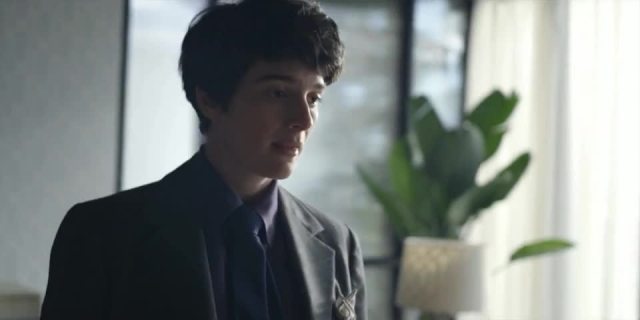
To be clear, the delivery of this isn’t self-pitying or plaintive; it’s confident and controlled. She’s not asking because she wants to be reassured; she’s asking because she already knows the answer. Ali just turns around and leaves. Josh and Sarah walk after her. To get her back? To comfort her? To yell at her further? Because they’re mad that Maura gave her more money than them? Who cares! Shelly sits next to Maura and leans over her to straighten the neckline of her dress, and it’s married-couple tender. In another frame, Ali wanders the empty streets of LA in the early evening light, looking pensive.
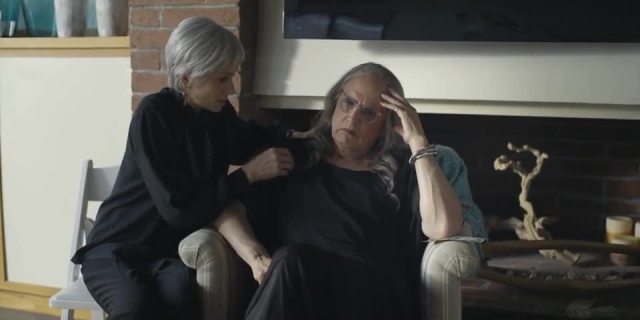
Aside from being a really impressive array of poor judgement calls on Ali’s part, this is one of the best scenes of the series, I think. I’m grateful for it because I wish that Maura got more scenes that centered on her actions and choices and those of the other characters, and not just her identity. Obviously her identity as a trans woman is important — crucial — to her lived experience, and to the premise of the show. But Maura seems to me like she’s gotten remarkably little screen time compared to her children, and when she does, the only situations we see her in are ones directly tied to her transition. I don’t doubt that aspects of transition would be overwhelmingly ever-present for her, but it seems unfair that, say, Josh gets to have arcs that are complicated and nuanced and take up a lot of screen time and aren’t directly related to his identity as a straight white cis man and Maura doesn’t, because to many viewers, her identity is her arc, and Josh’s isn’t. Because being a straight white cis person is neutral and can accommodate other arcs alongside it, but the other-ness of being trans eclipses other parts of what Maura’s fictional life could contain.
It troubles me because it feels like this may reinforce ideas that straight and/or cis viewers already have that trans and/or queer people are defined entirely by those identities, and don’t have “normal” lives outside of them. It makes it harder to see trans and/or queer people as people, and easier to see them as concepts, or FCKH8 PSAs. And in media that’s ostensibly about trans and/or queer people, this idea can be very limiting; it means that we don’t get to see those characters, the ones that trans and/or queer viewers most relate to, doing the things that we do in our own lives. We just see them doing the stuff that seems interesting or novel to straight/cis viewers (transitioning! coming out!), which is dehumanizing. I don’t want to see less of the parts of Maura’s life that are directly related to being a trans woman, or to be able to forget that she’s a trans woman; I just want to see her do even more on-screen. (Possibly the inclusion of Our Lady J as a trans woman writer for Season 2 of Transparent will help ensure that this happens!)
All this to say that I’m really excited to see Maura and Ali have an uncomfortable fight about money and Judaism and childhood, and it would delight me to watch them have a million more.

Later that night, Sarah, Shelly and Maura sit around the kitchen table (the same one that ribs were eaten at in the pilot, if I’m not mistaken) and snack on leftovers. Sarah offhandedly announces that she and Tammy are getting married (which; did Tammy agree to that?); Maura tells her it’s wonderful and Shelly is excited about a wedding, but is noticeably less pumped than she was about Josh and Raquel. Josh and Colton show up, Josh does a terrible job introducing Colton and doesn’t explain who he is, and Colton awkwardly asks if the family can say grace because he’s used to doing that before he eats.
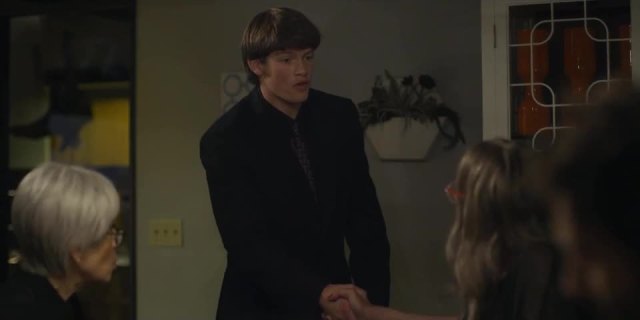
Into the middle of this Ali returns, and is accepted with little fanfare and a little good-natured chanting of “Ali McNally.” How fascinating/irritating it must be, to have a name that rhymes easily. Colton encourages her to sit down and join hands to make the prayer more powerful, and Ali compromises by grabbing onto one hair on Sarah’s head. And this is how we close the season: everyone in the family looking around at each other while a white boy from Kansas praises Jesus.
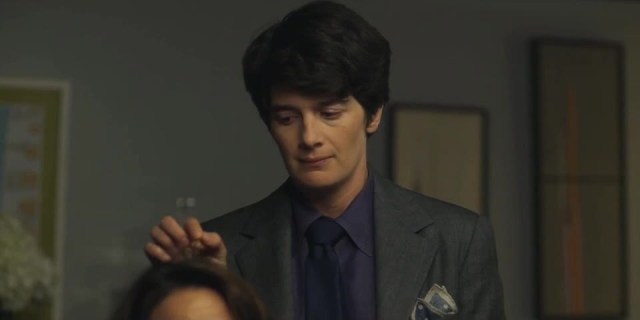
And that’s it! That’s Season 1 of Transparent. We await Season 2 with clear eyes and full hearts. For me, I found this season well written in terms of dialogue and very well acted, often very affecting, although I was occasionally baffled by choices in representation and storytelling. I’m very excited that Our Lady J will join the writing staff, although (as Mey has pointed out) a show centered around a trans woman needs more than one trans woman writer on staff. However, what I think about this show isn’t particularly important! What’s important is what trans women think about this show. I’d like to direct your attention to this passage from Mey’s recent article on Our Lady J’s joining the writing staff, which you should also click through and read all of:
However, there are many who criticize Transparent. First of all, the show stars Jeffrey Tambor as Maura, and although he does a wonderful acting job, the fact remains that casting cis men as trans women not only takes jobs that could go to trans actors, it also helps to reinforce the idea that trans women are men. Additionally, Transparent tells the story of a well-off, older, white trans woman with a family, a story that has been told many times already. Many trans women of color and younger trans people have said that although they think the show is well made, they don’t really see themselves or their experiences reflected very much in it. Some even found Soloway’s announcement that she would be mentoring trans women writers to be a bit condescending. There’s also the fact that having just one trans woman on the writing staff who is supposed to represent All Trans Women is not really the ideal situation. And as you might remember, Mari and I both had very conflicted feelings about the show before it came out.
Okay, now it’s your turn! Opinions on Transparent (particularly from trans women), go!



Comments
That last cap is the approximate sincerity I brought to prayers when I went to sunday school with my neighbors, because I instinctively loved anything I could still do while grounded.
just popping in to say i have really enjoyed these recaps as well as your critique of the show and hey, you’re doing great.
Another great recap!
Also, I just want to make it clear that I actually do love this show. Like, I mean, clearly I have some problems with it, but I do think it’s one of the best written and best acted shows on tv or the internet and I cannot wait for season 2.
Thank you Mey! I feel the same, and I hope that my genuine liking of this show was visible sometimes between my deep anxiety and gnashing of teeth about these characters’ decisions and my own wishes for queer and trans people on television.
“Jesus God, Tammy. I thought all your previous marriages failed because you’re a lying philanderer but maybe it was just because you wouldn’t shut up about interior design.”
Yes!
I’m still trying to get my head around Maura and Ali’s relationship, especially because of that scene in the pilot where Maura talked about people seeing what you don’t want them to see and then Ali lashing out at Maura. I just want more.
I want more of everything, especially Maura with story arcs beyond her transition. That is very noticeable when getting drawn into the motivations and stories of other characters, but I agree seems to be lacking with Maura’s character.
Thank you for these recaps, they have been fantastic.
“I want more of everything, especially Maura with story arcs beyond her transition. That is very noticeable when getting drawn into the motivations and stories of other characters, but I agree seems to be lacking with Maura’s character.”
You nailed it! Ask anyone what this show is about and the first thing they’ll say is it’s about a transgender person. But, in fact, it’s the shallowest plot line in the series. And as the season went on, it got less and less about Maura or the trans people in her life… which is really typical in tv representations of trans characters: bring them on for a short burst of pr but once you’ve covered the basics of their transition or how other people are ‘shocked’ by them, go on to the business at hand of what’s going on with the cis characters. It’s typical tokenism.
I haven’t read all the recaps and I’ll do that after, but have you guys talked at all about Ali’s gender presentation in this episode and how it counterpoints Maura’s? She’s straight-up dressed in “men’s” attire, and no one has any reaction, but no one can take their eyes off Maura and what her attire means – about her and to themselves.
That is a *huge* double standard about how we think about gender presentation – people assigned male at birth can’t dress in attire that we perceive as feminine, but people assigned female at birth can do so in attire perceived as masculine and not a word is said, or anything at all assumed about their gender identity.
For me – this is huge. I’ve been dressing exclusively in “men’s clothes” for almost 20 years without anyone saying anything. But when I came out officially as trans last year, friends and family flipped out – they wanted to know when I’m changing my names and pronouns, when I’m having surgeries, when I’m going on hormones. None of those things are specifically *required* to consider yourself a trans person at all. But identifying as trans means that I *have* to “transition” beyond clothing in their eyes for it to be “real.”
On the other hand – Maura has changed clothes and suddenly, she’s a woman. Granted she has changed her name and her pronouns, but so far she’s not on hormones, and not having any gender-alignment surgeries.
The sexism inherently bound up in transphobia is enormous; our expectations of what it means to be a man is so rigid, whereas what it means to be a woman has tons of nuance to it – so much that my clothes don’t tell people anything about my gender identity until I specifically state what’s really going on.
“On the other hand – Maura has changed clothes and suddenly, she’s a woman. Granted she has changed her name and her pronouns, but so far she’s not on hormones, and not having any gender-alignment surgeries.”
Yes, I get your point but as someone who’s been there, Maura is not really viewed by the world as a woman, she’s a man in a dress. And being viewed as a man in dress opens her to a profound level of potential violence, ridicule and discrimination. Yes, they had one incident in the show where she’s hassled in a women’s room but in the real world it goes way, way beyond that… into employment, health care, law enforcement, into being shamed on the street and constant looks others… both men and women, bestow upon you. Moreover, even among those supposedly progressive welcoming types (even within the queer community) they’ll call you a woman and use the right pronouns but, when push comes to shove, who they think you really are will come out spurting out at the most inopportune times. Yes, people assigned males at birth have a rigid code of gender expression they live within (or face retribution) but it actually makes transition all the more difficult. I don’t minimize all that trans masculine people face, but I do think it’s a very different experience.
“Are you all really grateful that you get to watch me work out all my issues via how much I hate Josh? You’re welcome.”
Actually, I really am. I cringed and raged through each one of Josh’s scenes and was so happy to read your descriptions of doing the same. Also, I really loved your analysis of the Ali/Raquel conversation in this episode. I totally hate Josh, and yet I was still getting sucked into the “oh no, he’ll be sad because what Ali is saying is going to mess up this relationship he manipulated Raquel into having with him.”
Thanks for the recaps in general, too. Looking forward to next season!
After finishing the season, I was attempting to express my Josh rage to an acquaintance. Her take was that she finds him “cute but confused.” I am not clear on whether we’ve been watching the same show.
Oh, Rachel, how I loved these recaps— and now I can emerge from lurking and spoiling!
During the show, I worked with Jill, the writers room, and all the actors and crew to record a “Behind The Scenes” series– and the interviews are so very touching and eye-opening.
Here they are, all free to listen to: http://audible.com/transparent
There’s so many complex things going on in this episode, but I admit I was very distracted by Gaby Hoffman in that suit…
The recaps were great Rachel!
I’m so late to this party! I just watched the entire series this morning, and then read through all of Rachel’s excellent recaps.
One thought about Josh: as much as I agree that he’s basically a walking relational disaster, the thing that I find interesting about him as a character is that he’s actually playing out a trope that’s usually used about (against) women: namely, the fact that he is obsessed with the idea that he’s in “serious” relationships with every woman who gives him the time of day. He’s the one who wants to settle down and have babies, even though he’s clearly not mature enough to do so. Just one example of the ways in which this show is playing around with ideas about gender.
Another thought about Josh: I wonder how straight cis men view his character, and whether they share any of Josh’s perceptions of himself as someone who is being perpetually *wronged* even though he tries to do the “right” thing!