





A lot of people don’t know anyone who is trans*, and as such may not have a complete understanding of transition and trans* issues in general. Our invisibility in mainstream, culture, in classrooms, in discussions of history, in scientific exploration of sex and gender, and even in campaigns for “LGBT” rights has left us isolated and othered. We are often deemed weird and abnormal by society simply because people don’t know anything about us.
Education is critical! And y’all asking questions is sometimes the best way for us to educate! (Of course, as we previously discussed [Trans Etiquette 101], it is important to be aware of and understand what is appropriate.)
You had so many thoughtful questions that we decided to divide our responses into several posts. Last month, we answered questions about how hormone therapy affects your sex life, whether or not we believe gender is a social construct, and much more! In this second installment, we discuss topics like “undoing” the effects of puberty, intimacy with a trans* person, and how to address gender ambiguous people.
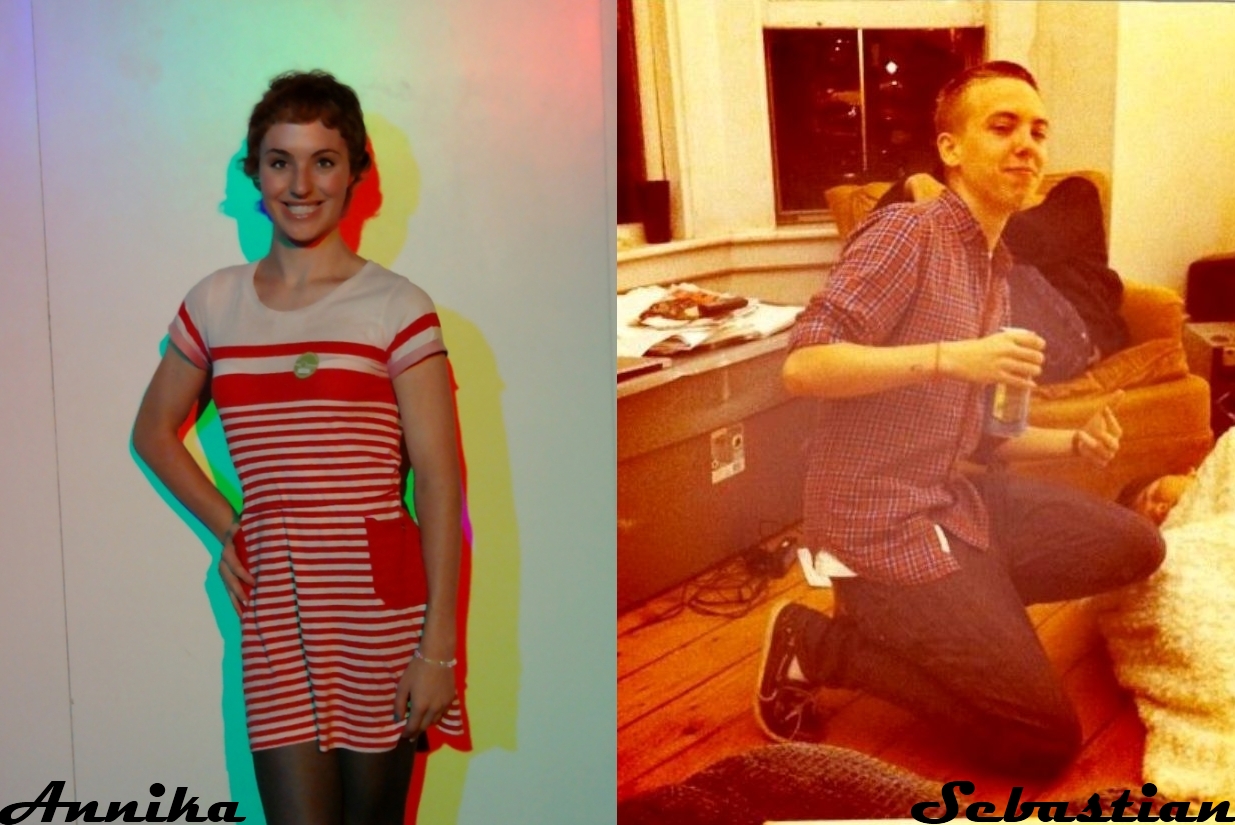
We would like to genuinely thank all of you who sent in questions. Although they appear here as anonymous, we know it took some courage to send them in to us on ASS. And it’s a gutsy thing to admit that you don’t know something and/or you want to learn more. We hope that we have done your courage justice!
[Privilege disclaimer: Also, before we get into our answers, it is important that we acknowledge that we are speaking from our own very specific perspectives and do not represent the trans* community as a whole. We realize that we have it easier than many others with respect to our race, social class, ability to not be read as trans, et cetera et cetera..]

Q: Did you transition before or after puberty? How did your age affect your transition?
 SEBASTIAN: I transitioned when I was 21 and 22. I went through “female” puberty. Most of our differentiating sex characteristics develop during puberty – these are called secondary sex characteristics and for males typically include genital growth, increased body and facial hair, deepening of the voice, etc; for females these typically include breast development, fat distribution to the hips and bum, etc. So if you transition before all these pubertal developments occur, you can avoid developing some of the secondary sex characteristics that many trans people ultimately work at “undoing” later in life. A perk for me would have been that if I had not gone through female puberty, I’d be taller!
On a non-physical level, I transitioned at the perfect age. I’m at THE transitional stage in my life, right now after all. I began social transition at the start of my senior year of college and had begun medical transition by the time I graduated. I essentially was able to start a new chapter of my life with a new identity. I didn’t have to transition on a job; I didn’t even have to apply to jobs before I was legally Sebastian and legally male.
 ANNIKA: I took my first estrogen pill when I was 16, upon discovering a bottle of estradiol in my grandmother’s medicine cabinet. I didn’t take my second dose until this February, at the age of 23, well after I had gone through male puberty. Thankfully, I seem to have survived what I call “testosterone poising” relatively well. I’ve always had pretty delicate features, and you would never describe my appearance as “manly”, even before I came out as trans. My natural speaking voice fits comfortably in the female range as well. But developing male secondary sex characteristics has certainly made transitioning more of a headache than it would have been had I not waited seven years between my first estrogen doses. While I was never capable of growing anything resembling a beard, I still have to go to electrolysis sessions twice a month to remove what facial hair I did have. I probably won’t be completely done with electrolysis until sometime next year. At $80 an hour, it’s definitely the most expensive part of my transition!
Age is important for trans* women- the effectiveness of estrogen almost always depends on how old someone is when she begins HRT. I’ve often heard that there is a “window of opportunity” (up to around age 25) in which hormones will have the greatest impact- the idea is that your body is still receptive to hormonal changes in the few years after finishing puberty.
Although I started a couple years after Sebastian, I definitely think that this is the perfect time in my life for me to transition. Moving to San Francisco last summer gave me the chance for a fresh start, away from the college environment where I felt trapped in my assigned role as a boy. I have a good job and I’m financially independent- something that proved to be crucial when my parents disowned me after I came out. I wouldn’t have been able to graduate if they had cut me off when I was still in college. I did have to transition on the job, but it really wasn’t as awkward or difficult as I feared it would be.
Q: What happens if/when someone chooses to not fully transition? I mean, that happens sometimes, right? Like if someone can’t afford surgeries or get them for health reasons?
SEBASTIAN: We don’t really use the terminology of “full” transition, because a full transition means different things to different people. Sometimes people don’t have all the surgeries or procedures or medical interventions because of financial reasons, but often times it is because not every trans person needs or wants every type of medical intervention. For example, some trans men do not feel uncomfortable about their “junk” and elect to not have bottom surgery. Same with trans women. Some trans men do not feel they need testosterone to live as men and do not undergo Hormone Replacement Therapy. Many trans women are satisfied with the effects of estrogen on their chest and do not have breast enlargement surgery. Et cetera et cetera. One of the truest things about the trans community is that each individual’s identity and transition needs are unique to them.
ANNIKA: The term “full transition” is problematic because there are no strict metrics by which to measure it. It also plays in to the false assumption that all trans* people desire the same thing: full sexual reassignment surgery. It’s true that the cost is often a barrier for those who do want it, but there are many other reasons why someone might not want to have SRS. Like Sebastian said, many trans* people are comfortable with their genitalia and don’t view it as a source of dysphoria. There are also potential risks to consider, including incontinence and the inability to experience orgasm.
Even hormone therapy is not universal. I know one girl who decided to transition without any medical intervention, and another who decided to take estrogen but not testosterone blockers because she wanted to maintain her high sex drive. My doctor told me that in some cases a person will reach a point where they are satisfied with the results of HRT and choose to discontinue further treatment. The trans* community is quite diverse- and the meaning of transition can vary greatly from one person to the next.
Q: What should I expect the first time I’m intimate with a trans* person of any gender? Should we talk about it first? Are things the same? What about people who are pre-op, for example – should I ignore or pay attention to genitalia?
SEBASTIAN: Yep, you should talk to them, or let them lead. I mean, the right answer here is you should talk about it. You should always talk to partners before you have sex with them. Find out what they’re comfortable with, what they like. But real talk, some of us don’t like to talk about that stuff out loud. I admittedly have never been like “Okay this is what I like and don’t like and please don’t do this and this is why.” Most likely, someone who is really specifically uncomfortable with parts of their party (as many pre-transition trans people are) they will identify what are often called “no touch zones.” Otherwise follow their lead. Say “I’m going to let you lead” and check in with them regularly – “is this okay” “do you like this.” Spice it up “show me what you want me to do.”
Something that might be worth discussing if you like to you know talk during sex is how the person wants their body and their sexual parts talked about. Many (not ALL) trans men like you to call their genitalia (even pre-op or non-op) dicks and their chests chests.
Every trans* person is going to have different discomforts (and some might not have any) just like any person you have sex with is going to. The sex might be different than what you’re used to, might not be so different after all.
ANNIKA: This isn’t something that I’ve needed to worry about yet, since my girlfriend and I had already been dating for nearly three years when I came out. But I have to agree with Sebastian- good communication is key. The stereotype of the “big reveal”, in which someone doesn’t disclose their trans* status until the clothes come off, doesn’t happen nearly as often as some movies and porn would lead you to believe. Discuss things first. Let your partner know that you’re receptive to their needs and allow them to tell you what they’re comfortable with. When in doubt, just be affirming of your partner’s true gender, whatever that may mean in the situation at hand. There’s no manual for “sex with a trans* person”, since each of us has our own individual preferences in bed, just like anyone else!
Q: I’m not sure how to politely address gender ambiguous people. I’ve heard from both butch cisgender ladies and trans guys that feel very upset when they are misgendered, but I feel bad that their different internal identities can look similar externally. Guides tell me I should go by presentation (but this can hurt butch women or trans people who haven’t transitioned) or to ask outright about pronouns if I’m unsure (but I feel very few people would be okay with that). I am also wary of using gender-neutral pronouns (namely “it”) for fear of dehumanizing or othering trans people and/or denying their true gender identity.
SEBASTIAN: This is a tough question. Being misgendered (mistaken for a gender other than how you identify) feels pretty awful if you are strongly identified with it or are particularly sensitive about people seeing you as you truly are. Certainly butch women and pre-T trans men or genderqueer people can look very similar. And often they are all sensitive about being seen as their true gender. Butch women, understandably, want people to see that there can be variance in how women express their gender identity. Trans men, understandably, want the world to see what they are feeling and know to be true. And genderqueer people, understandably, would love it if the world made room for non-binary genders and could actually validate people whose gender identities didn’t fall into either category.
I live in a part of the country that has lots of butch women. (Once dubbed Lesbianville, U.S.A.) I love that female masculinity is visible and affirmed here. But it meant that as a trans man early in transition, pretty much everybody thought I was a dyke (and I mean that as an identity not as any sort of derogatory term, obviously), and a lot of times people went out of their way to affirm my masculine female identity to show that they “got it,” you know? When I went out with my girlfriend at the time, it was “Hi ladies” “What can I do for you ladies” constantly.
It felt pretty terrible until a trans friend of mine who had been living as a man without testosterone for over a year at that point pointed out how great it was that gender variance was visible here. When I went home to North Carolina (or traveled most anywhere actually), my high voice and feminine features didn’t mean a thing – short hair, flat chest (I was binding), masculine style of dress = boy.
Still when you’re feeling dysphoric, being misgendered can be detrimental (and really dangerous) to trans people.
But that doesn’t answer your question. I don’t really have a great answer. It’s a tough situation, because our language (and most languages) essentially require identifying someone’s gender if we’re going to talk about them. The best gender neutral option, in my opinion, is using “they,” which is actually what some genderqueer people prefer.
Probably the best solution here is to put effort into not gendering people in general. Wouldn’t the world be a better place if we weren’t so hung up (consciously and unconsciously) on figuring out someone’s gender identity? Try using “they” or “them” or “that person” for everyone, even those with the most typical gender expressions. That way you aren’t actually othering gender ambiguous people.
And, you know what – ask. Try to ask people who might know (I recently encountered a barista who I thought was genderqueer but my friend knows her and it turns out she very much identifies as a woman) so you don’t have to ask them directly if possible. To a trans person, it’s way better to have someone admit they’re not sure than to have them using wrong pronouns. Make sure you ask in a private setting, though.
ANNIKA: I feel that this is one area where trans * women have it easier than men. Even if a trans* girl doesn’t pass as cisgender, there are usually some pretty obvious cues (makeup, clothing, etc) of her true gender identity. Of course, it may get trickier for those trans* women who don’t identify as femme. Still, I feel that it’s harder for pre-T trans* guys and very butch cis women, because sometimes the only discernible difference is personal intent.
At my trans* youth clinic, it is standard practice when meeting someone for the first time to introduce yourself with your name and preferred pronouns. If anyone is unsure, they ask. It just makes things easier. That being said, the clinic is probably the queerest place I’ve ever been (which is saying a lot), and I realize that it’s not so simple in everyday life. If you are unsure of how to address a gender ambiguous person, avoid explicitly using pronouns until you have a better idea. If the usual cues like someone’s first name don’t make it any clearer- ask! Ideally, you should consult a mutual friend before bringing it up with the person in question. Don’t feel bad for asking, either! One of my friends addressed her transmasculine classmate as “she” for several months before he politely informed her that he prefers male pronouns. So when in doubt, ask, because even if it’s awkward or uncomfortable, it’s always better than misgendering someone.
Q: I think someone I know is trans*. How can I show them I’m an ally?
SEBASTIAN: This question could be one of two things.
-
I think a person who is still presenting as their assigned gender is actually trans and I want to let them know I support whatever they are feeling / planning to do
-
I think a person I know as one gender has a history living as another and want them to know I’m cool with their trans history.
In either situation the best thing you can do is be trans-inclusive in your everyday life and language (something I hope we are all working on anyway) – don’t adhere to binary language or differentiate too much between men and women. If you want to be a vocal ally, get involved in campaigns or follow political events, put a button on yr backpack.
I don’t think in the first situation it would be a great idea to ask them if they are trans. It depends on your relationship with them. If you are close, you could comment on whatever it is in their gender expression that makes you wonder if they have thought much about their gender identity. But only if you are close. They haven’t told you for a reason, and without an intimate relationship to the person, you could really make them uncomfortable
In the second situation, do not talk about it. The best way to be an ally to someone who is living stealth is to think of them as their current gender, try to stop analyzing it and guessing their trans status, and certainly do not talk about it in any way that could out them. Again, they haven’t told you for a reason (and there are lots of possible reasons to live stealth), so you sort of just have to let it go. ALSO, a lot of people give off trans vibes who aren’t trans. I know trans guys who have assumed another guy was trans and he wasn’t and that’s awkward for everyone.
ANNIKA: Like Sebastian said, this question could refer to two different scenarios. Either way, don’t put this person in a situation where they will feel uncomfortable. It’s great to show that you’re a trans* ally, but make sure you do it a way that doesn’t make your suspicions about this person blatantly obvious, especially if they have already transitioned and are living stealth in their true gender. If they haven’t told you anything, you shouldn’t make any assumptions. Maybe this person doesn’t view being trans* as a fundamental part of who they are. Speaking from my own experience, it’s really nice sometimes to not have to wear your trans* status on your sleeve. I can totally understand why some people choose not to be out to absolutely everyone.
You should also tread carefully in the other situation because you don’t want to out someone who hasn’t fully come to terms with being trans* yet. For years, I was terrified that someone would discover who I really was, so much so that I avoided nearly every activity/behavior considered remotely feminine. I thought that there was something wrong with me, and I had to work through a lot of internalized transphobia to get where I am today. I’m not sure how I would have reacted if someone had come up to me at age 18 and told me that they suspected I was really a girl inside. Long ago when I was a frat pledge, we were required to take a photo in front of a gay bar dressed in drag (because obviously the “bros”could think of nothing more humiliating than queer femininity). I wanted to make sure that none of the other pledges suspected that I was trans, so I wore a cheap silver wig, ill-fitting clothing, and no makeup. Even then, a couple of the guys made comments about how I looked like “such a girl”. I laughed them off, but it made me really uncomfortable because it brought about feelings that I wasn’t prepared to deal with yet. So, moral of the story: show that your are a trans* ally, but don’t directly approach this person about it unless they come to you first.
Q: In the gay community there is often a sense of transphobia. Have either of you ever noticed/experienced/felt a sense of homophobia within the trans* community?
SEBASTIAN: Not outward. Not like I’ve seen in terms of transphobia within the gay community. But I have noticed some trans people really make effort to distance themselves from the gay community and gay people, and sometimes the way they do this can come off as homophobic. Most of us want so badly to be recognized as separate from the gay community which is a constant challenge to people who don’t understand trans* stuff, and a lot of us spent a good deal of time basically being forced into the gay community before we came out.
When I lived as a woman, I said some pretty terrible things about lesbians and the gay community at large, even though most people saw me as a lesbian and I identified as a woman who liked women. And I think it was entirely this deep-seated and not totally clear resentment that I had to be a lesbian when something in me really needed to be seen as something very different.
ANNIKA: I can’t speak for the community everywhere, but I haven’t noticed any homophobia whatsoever within the SF Bay Area trans* scene. Most of my trans* friends identify as queer (but obviously there are many trans* people who don’t), and we tend to gravitate towards a diverse community that is inclusive of all gender identities and sexual orientations. I really can’t imagine a situation where someone would say or do something homophobic. I don’t think people would even know how to react, that’s how absurd it would be.
One thing I really love about the San Francisco trans* community is how it aligns itself with other marginalized groups in demanding civil rights. At Trans March two weeks ago, many of the chants were about racism, immigrants’ rights, and homelessness. I suspect that this inclusion of other social justice movements is rooted in our community’s history of too often being ignored as the silent “T” in the LGBT acronym. Many of us recognize that the push for equality is about transforming the structures that lead to inherent social disparity; not simply gaining access to privilege.


Comments
I am trans and to be honest I often avoid discussions about trans topics because I find that they usually end up hostile and feel exclusionary to me. So with that in mind I just wanted to thank you both for being so smart and thoughtful about your answers, and for trying to educate instead of rage. That’s not always easy and I really appreciate it.
Thank you – that means a lot
Hey Sebastian, we have something in common: we’re both legally male!
(Note to self: don’t get arrested. I don’t want to see what men’s prison is like…)
I’m still “female” with Social Security so I think I’d get thrown in women’s prison. Which is why I haven’t made any effort to change that. I don’t want to see what men’s prison is like either. Trans people in prison (as I’m sure you know) is a serious issue and a very scary thought!
i love that yall are doing this. This entire series is so interesting to me, and really eye opening. thank you.
Your patience for all of our questions is admirable, and I can’t imagine what you have to deal with from people that aren’t as open-minded/queer-aware as we are. I have so much respect and admiration for both of you.
Just curious. Did you ever respond to the accusations (or points of view) expressed on that webisode of The Gloves Are off – when Cathy DB & Jill B were talking about Chaz’ transition?
Did they warn you before hand that they would be talking about you?
I just watched the webisode that you’re referring to. Basically, they were saying that Sebastian’s criticisms of “Becoming Chaz” were too extreme for mainstream society- that we as trans* people should temper our demands for respect/trans*-inclusive language/etc. because “normal” people aren’t prepared to deal with it yet.
They said his article was lacking in substance, which is ironic considering how uninformed these two were on the subjects they were discussing. They were seriously like, “I’m confused, what’s the difference between transgender and transvestite?” and “genderqueer? that term wasn’t around ten years ago” and “the trans* community is where we, gay people, were in the 40’s”
Typical ignorant nonsense from supposed “allies”. I stopped watching after a few minutes.
Hm hadn’t heard of it, I might look into it, though I might just take Annika’s word for it and save myself some strife.
You guys rock. This series has been really helpful for some of the members of my GSA.
I have to admit, in the gender-pronoun situation, I do a lot of name-checking when I’m not sure, but i think i get more leeway socially with my trans* friends, since I look like a fifteen year old boy, and we can swap the “sweet old lady tells my boss what a polite young man I am” stories
I have several trans* friends, some I knew before their transition and some I met after. This has been extremely helpful.
As usual, your Q&As are great. I do have an issue with one of the answers, though, as it pertains to the question about ‘gender ambiguous people’ and Annika’s response that trans women have it easier. MAAB gender ambiguous people are perhaps some of the most discriminated against and attacked people in our society. Not only are they regularly misgendered and disrespected (and often in far nastier and physicalized ways than FAAB gender variant people), but they encounter perhaps the worst job discrimination, law enforcement abuse, bathroom policing and lethal violence against them. Yes, I understand you’re talking about ‘gender clues’ as mentioned in the question, but to say MAAB people in any way have it easier is ignoring a lot of very nasty realities.
Definitely. I only meant that it’s often easier for an ally to avoid accidently misgendering trans* women based on the cues that I mentioned.
Transmisogyny is a huge problem in our society- and in no way am I suggesting that MAAB gender nonconforming people have an easier time overall than others in the trans* community.
Thanks for pointing this out!
Sorry, but MAAB? FAAB? Google isn’t helping.
Male assigned at birth and female assigned at birth. I love these terms and they are pretty new in trans and academic circles! It’s a way of talking about our trans past without weighing how we previously lived over our true genders. For example, me saying I was female assigned at birth (FAAB) is a much more honest statement than saying I am an FTM (female-to-male).
Thank you.
You will also see CAMAB and CAFAB, “coercively assigned male/female at birth.” The emphasis of the extra word is that you don’t get a choice as to how you’re gendered, your parents and the doctor at your birth decide and then tell everyone else.
Okay, I have a question, probably silly, but what does the asterisk (*) mean?
The asterisk is intended to function as a wildcard character … It’s just a way of denoting inclusivity of everyone under the “trans umbrella” — folks who identify as transsexual, transgender, genderqueer, agender, bigender, two spirit, etc., or otherwise gender variant.
Male Assigned At birth, Female Assigned At Birth
Aw man, I swear I hit reply to the specific comments I was responding to… ):
Ha, ok, wildcard. That’s what I thought, but didn’t know how to say it. Thanks :)
MAAB = male assigned at birth (mtf, in older terminology)
FAAB = female assigned at birth (ftm, in older terminology)
oh looks like you and Simon already answered for me
Whoops, this was supposed to be a response to @chrissie riot.
MAAB=Male Assigned At Birth
FAAB=Female Assigned At Birth
This was excellent. So glad you posted a part 2 on trans* questions.
Great article, I found the information on pronouns and non-gender-conforming individuals very informative. I passed it along to my cisgendered friend whom I had a discussion with just about a week ago on that very subject.
Annika, you mentioned that you’d been dating your girlfriend for almost three years when you came out. I’m curious about how your transition must have effected her. Has she changed how she thinks about her gender identity or sexual orientation since you’ve transitioned? What’s it been like for her?
Great question! Obviously her gender identity hasn’t changed because of my transition (I don’t think it really works that way), but it did cause her to reflect on what her sexuality means to her. She had only ever been with boys before, although she has always been involved in the queer community.
Now, she’s dating a girl (me) and we’re still very much in love and attracted to each other. I think our situation really highlights the limits of the labels that we ascribe to sexual orientation. Is she a straight girl? The stares we sometimes get when we embrace in public say otherwise. Is she bi? You tell me- I’m the only girl she’s ever been attracted to. The only label that really seems to fit is ‘queer’.
Wow, really interesting. Thanks so much for answering. Labels are so limiting, aren’t they? Yes, of course, her gender identity wouldn’t change, though it is possible that your transition could have caused some questioning or shift in her gender presentation or self-image, maybe (meaning how she saw herself or presented herself when dating a male, vs. a female). You’re very fortunate to have someone who was already comfortable in the queer community and ready made to transcend the labels. I’ve only known a couple of other trans* people, and they were not quite so lucky.
Thanks so much to both you and Sebastian for being so generous and honest in sharing your experiences. You are both so brave.
Thank you Annika and Sebastian for giving us thoughtful and eloquent answers. This was really helpful.
RE: politely addressing gender ambiguous folks: I’m butch/genderqueer and get called “sir” and “young man” by strangers and retail/food service workers from time to time, and honestly it doesn’t bother me that much. Though I’d much rather be called “sir” than “sweetheart”.
If it’s someone you don’t know, just avoid using any pronouns or gendered titles. I use “y’all” all the time, ‘cuz I’m a Southerner, but “you all” or “you folks” is less potentially fraught than “you guys” or “ladies”. “They” is also pretty useful and acceptable.
If it’s a new friend or acquaintance, ask in a respectful way in a private space. I really appreciate the rare moments when someone asks what I prefer to be called…even if it’s in the context of “hey, do you go by ___ or do you have a nickname you prefer?” that can be a safer way to open up the topic if you’re not sure.
Parts of it were a little harsh (imo) but I suppose that’s why they call it The Gloves Are Off …. it just seemed slightly unethical to call you out like that, when it’s an interactive “show” and Cathy & Jill are usually begging for people to call in and debate the topic.
I’m surprised they didn’t at least warn you, it would have made for an interesting debate :/
This is so incredibly helpful. Annika and Sebastian, you are friggin’ amazing, thank you. I really appreciate your help in educating me about this, because I’ve had no experience in trans* culture or issues.
These Q&As are fantastic! I wish they’d been around back when I was teaching Intro to Women’s Studies in grad school. I’m definitely emailing links to my friends who are still teaching, though!
Thanks to both of you for taking the time and effort to write these.
Thank you to everyone that answered my question and also thank you to both Annika and Sebastian for this series.
There’s so much about the trans* community that I don’t know and don’t really quite understand but I don’t even know how to ask the questions to find answers so this helps. Is there a book maybe? A website?
thank you for these articles, they’re helpful. sebastian and annika, y’all are wonderful.
Hi, just wanted to add my voice to the thanks for this series. Impressed by the courage, patience and thoughfulness of you both. Keep ’em coming. :)
I recall at one point in my transition, walking into an elevator in a hospital, after walking with my sister-in-law down to her vehicle. A hospital staff-person asked me “What floor would you like ma’am…err, uh sir…err, uh ma’am?” I was more amused than upset, because I was becoming more comfortable with true self and he was obviously terribly distressed by his inability to label me and put me into a specific box. My inner thoughts at that moment were akin to “Wow, it sucks to be you right now, doesn’t it?” I answered “three” in a soft voice and he pressed the button. It just made me wonder why we feel a need to add a person’s gender to a simple question. Couldn’t he have simply asked “What floor would you like?” I wanted to ask if I got a bonus floor for giving him the “right” answer.
Annika and Sebastian, kudos to you both on your ongoing efforts to educate here. I have found this site to be one of the most accepting and willing to learn. My own personal feeling when I am asked questions is that I prefer to educate rather than obfuscate. (Again within reasonable boundaries of curiosity). Thank you both once again for an interesting and enlightening column.
I like the idea, though, of having a term of respect and acknowledgement to use with people who may be strangers.
I nominate ‘comrade’.
I find myself in need of a gender-neutral-term-of-respectful-acknowledgement-to-strangers for use when waiting tables. I tend to avoid gendered pronouns as often as possible in that environment, but I’d like to have a failsafe leak into my vocabulary.
I like ‘comrade’, but I don’t think that works in the restaurant environment. It’d sound stupid for me to use ‘mate’ without a corresponding accent, and I don’t live in the south so ‘y’all’ and ‘folks’ don’t work, at least not for me. I sometimes resort to ‘hon’, but I don’t like being that aggressively intimate…. this is stressful.
Thanks for the post. I’ve been stumbling quite a bit with the pronoun problem for a while now, especially since my father spent half my childhood drilling “ma’am” and “sir” into me, because it was “proper etiquette.” I don’t think he’s ever been more wrong about anything.
wanted to point out something that is really important.
this question:
“Q: I think someone I know is trans*. How can I show them I’m an ally?
SEBASTIAN: This question could be one of two things.
I think a person who is still presenting as their assigned gender is actually trans and I want to let them know I support whatever they are feeling / planning to do
I think a person I know as one gender has a history living as another and want them to know I’m cool with their trans history.”
I want to point out that although someone may have transitioned, that doesn’t mean they identify as trans*
Not all people who transitioned identify as trans*
I have some friends who transitioned who identify as gay or lesbian or queer but not trans*
I also have friends who transitioned who identify as straight and not trans*
So I just want to say to never make assumptions about someone’s identity even if you know they transitioned at some point.
Thanks for this post. I especially appreciated your responses to the question about assumptions and being misgendered. A few years ago I went to Camp Trans in Michigan and my mind was just blown wide open. Each night there was a camp meeting that gave everyone a chance to identify their gender and preferred pronouns to the group. Very much an important exercise, but also one that I understand was safe because it was an identified safe space for trans folk. As a whole, my experience there was quite mixed, but some valuable lessons were learned. People are people first, and all are worthy of respect and consideration. Pardon my cliched summation!
joining the “thank you” chorus as well. even though i know you two aren’t speaking for the entire trans* community, at least you’re giving us *some* idea about your personal situations.
i appreciate y’alls taking the time to answer the questions that most folks have had on their minds.
On the idea of using Gender-less language, Isn’t it better to guess and get it wrong then go about treating everyone as though they have no gender? I assumed gender would be support important to a member of the trans* community?
this sounds all wrong… hopefully someone can figure out what i’m tying to get at. sorry :) btw great article
It’s pretty hurtful for many trans* people to be misgendered. The pain they go through when you get it wrong is worse than the potential awkwardness of asking (also, more often than not it’s THEIR pain and YOUR awkwardness — they don’t feel as awkward as you do).
Genderless language should be used generally, so you don’t ostracize anyone. But yes, as soon as you know what pronouns and labels people like, gendered language can be empowering! Using non-gendered language just allows everyone to express their own gender (which might change regularly, or might not be reflected by their clothing or name, or might just surprise you).
I frequently ask people outright what pronouns they prefer (in queer and accepting spaces, of course — nowhere it would be dangerous or uncomfortably outing someone. No one has every had a problem with it. Most people I know who are gender ambigious don’t mind being asked – if you can’t tell, it’s almost guaranteed that they’ve thought about gender a bit. Asking what pronoun they use is a great way of showing them that you’re an ally/trans-friendly, and respecting however it is that they chose to identify.
great article!
I’m genderqueer and for me pronouns in general are just stressful. Whenever possible I prefer people just use my name rather than ‘he’ or ‘she’. It is completely possible to eliminate pronouns in most conversation, it just takes a little awareness!
I don’t know anyone who is trans but I want to be a good ally. Aside from the obvious: sticking up for trans people in conversation, donating to trans causes, etc., do you have any suggestions for stepping up my involvement?
Just a thought – just because you aren’t aware that someone you know is trans*, doesn’t mean that you don’t know any trans* individuals. That’s something you could work on as far as being an ally, don’t ever assume that you know how someone identifies. It’s hard to change that automatic socialized thought process, but it’s definitely important!
Also, if you could recommend a charity that you think is particularly good at supporting trans rights, that would be great. A friend told me HRC doesn’t have a great record supporting the trans community.
Thanks for this! I think that one of my friends may be transitioning soon (or is at least considering it) so this article has been really helpful.