





It’s late August, which means that some of you are gearing up to start college for the fall semester – maybe for the first time. While you sort through course catalogues and make packing lists and plan the last hangouts of the summer with your home friends, you also are possibly freaking out about what’s going to happen when you show up on campus. In light of your impending education, dear college-bound butterflies, we have compiled all our wisdom on everything we could think of with regard to College, and compiled it into this College Advice Megapost Situation. We hope it helps quell some of your fears, empowers you to take on whatever challenges you face, and gets you excited to jump into this new exciting life endeavor!
For quick reference, here are links to the many bits of this post:
- making queer friends
- coming out
- hooking up and dating
- drugs and alcohol
- academics
- college resources
- navigating college bureaucracy
- college and MONEY
- transferring
- mental health
- changing your name and pronouns
- being an international student
One of the reasons why this post is so long is because so many of us had drastically different college experiences. It turns out that college is like real life, in that some of it is great and some of it sucks and a lot of it is Really Hard, and it’s going to be different for every person. And while this post incorporates a lot of perspectives from the Autostraddle staff, it isn’t even close to being comprehensive. There are so many ways to get a degree and have a valuable college experience.
Veering from your initial plan is fine, normal and can often be really, really good in the end.
Very few people’s lives turn out how they plan when they are 18 or 19 years old (or really any age). You are growing up, and you will change as a person during college. You will meet new people who will teach you things you didn’t know about yourself. Your interests may shift. Your priorities may change. I encourage you to embrace these changes and shifts. Sometimes your dream school doesn’t turn out to be the fantasy you imagined. It’s okay to leave if you need to. It’s okay to do something different than what you said you wanted to do on your application. It’s also fine if you have no idea what you want out of college, yet. Veering from your initial plan is fine, normal and can often be really, really good in the end. If you told me five years ago when I started college that I’d be where I am right now, I would have been pretty surprised.
It’s nice to surprise yourself.
It’s also important to find people that will support you through these surprises, good and bad. It is more likely than not that you are constantly being inundated with advice from people who think it is VERY CRITICAL you do college in a SPECIFIC way. These people may include, but are not limited to: your parents, your roommate, your friends, college administrators, your professors, children you babysit for, and strangers you meet on the bus.
Some of these people will offer you good advice. I recommend you figure out who you trust and who you believe wants what’s best for you. When you have a decision to make, talk it over with those people, and try to make the decision that is right for you, not someone else. That doesn’t mean you should be an asshole and only look out for yourself; it means to learn to discern what you actually need from what people tell you you should need. You do you, as they say.
And even if you start out solid, and you’re “on-track” to graduate on time, to fulfill all the major requirements, to get the exact degree you planned to — know that it’s going to be okay if things suddenly shift. I wish I’d understood that when I went to college. I was pretty afraid to mess up, and I definitely avoided taking some risks because of that fear.
So here we go.
Just so you know, this post reflects my and other staff members’ experiences, mostly at four-year American universities. If that’s not what you’re doing, I hope you still find things here that apply in useful ways to your situation, and I hope you all post your own tips in the comments!
On Finding Friends and Meeting People
College is an intense social pressure cooker, and it might take you a while to find your people. Give yourself time, or, as Riese said, “if you have social anxiety, it will probably take longer than a few months to find your place at college and possibly the entire year to find friends you really click with, and it’s gonna be hard but YOU CAN DO IT.”
A good first step: Get out of your dorm

Probably you will be provided with some sort of pre-made friend group upon your arrival on your campus, possibly in the form of the people living around you that have all been entrusted to the same Residential Adviser (RA) or RA-equivalent. These groups will be hit or miss. Maybe these people will become your best friends for the rest of your life. It’s more likely that you will find your feelings about these people somewhere between “these are nice people who I enjoy living near” and “this is my own personal hell.”
Regardless of whether or not you feel these people are your new chosen family or your new nightmare mandatory family dinner, take some time to intentionally get away from them. Find an activity, a class or a group where everyone is coming together based on a common interest or experience. Go hang out at a center where people gather based on a shared culture or identity. Join a team. The point is, that it might feel like there’s no way to meet friends outside your dorm, or that if you don’t immediately click with the people in your dorm you are in some way “doing it wrong.” You’re not. And even if you love those people in your dorm to death (which can happen and be amazing), go meet other people anyway. There are a lot of people at college. See who’s there.

And getting outside your dorm can be especially necessary if you are looking for queer community. Which brings us to the next thing:
How do I find Queer Community?
Even though my school was super queer, my dorm freshman year was not a place where I found any queer women, and it took me almost a year to find a group I clicked with. Try looking in your school’s LGBTQ or Women’s centers, feminist and/or activist groups. Other Autostraddle staff found queer people in theater, volunteering at women’s organizations, sports, and a class called Queer Visual Culture.
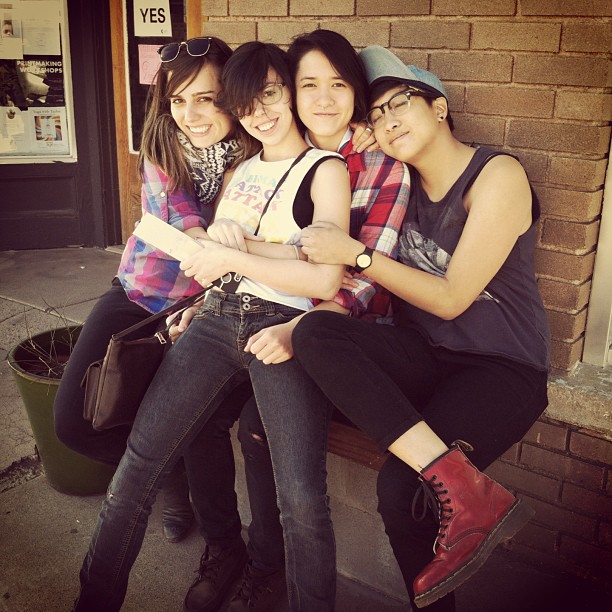
It is possible you won’t feel particularly comfortable in your school’s de-facto group of queer people, whoever they are. If your school has a large, visible queer community, it will either be really easy to jump in, or it will feel really hard. Finding your queer group might be as easy as going to the LGBTQ center ice cream social during first year orientation. But then it also might feel like you don’t fit in with them in the way they expect you to. “The queer community at [my school] was really intimidating and I never thought they’d include a femme bisexual so I never tried to get included,” said Hannah, who found queer community online. Fikri similarly found queer community off-campus, “I think I’ve met a grand total of like, two people I’ve actually liked in LGBT societies over four years and two schools/countries. But yes volunteering especially outside school changed everything for me.”
Cecelia offered some wisdom for people at schools that aren’t obviously super queer:
“Don’t feel bad for choosing a school that isn’t a queer hotspot. Even if there isn’t a visible queer scene on campus, usually the LGBTQ resource center has a lounge where you can hang out or study in a safe space. If you stake out for even an hour there, you’ll definitely find others building the same kind of community you are looking for. If this isn’t an option for you, find time in your degree plan to take an elective class in a strategic subject area. You may have to spend hours searching the course catalog in a sea of ‘Marketing 101’ classes until you find ‘The History of Witchcraft.’ Rule of thumb: if the subject of the class is useless to anyone interested in maintaining the patriarchy, you could find your next girlfriend there.”
If you don’t find queers you jive with on campus, see what’s in the area around your campus. Find an Autostraddle meetup, find a lesbian bar or party, find a feminist bookstore or a community activist group. “Especially if your campus is huge,” Cecelia added, “it’s very probable that you’ll meet someone at a local protest or film festival and realize only after introducing yourself that you go to the same school.”

KaeLyn went to a college in a rural area without a big queer community. “You have to band together when you are so few and there is real beauty and intimacy in these isolated queer communities,” she said. She also talked about navigating safety as a queer person of color in a rural place.
Safety is a real concern in these smaller communities, though. For black and brown queer and/or trans people, especially, personal safety is an important consideration. At my rural upstate NY college, we drove over an hour to our nearest gay bar because our folks often got harassed at the popular bars around the college town area. QTPOC should think about how comfortable they are in spaces that are mostly white. You may be one of the only QTPOC on your campus. I can count the number of out QTPOC at my school on one hand and I was often the only one in any given space. All that said, our queer family was very tight and I am glad that I got to come out in an environment like that, where everyone knew each other and looked out for each other. I would make the same choice over and over again.
Try new stuff

This is possibly the most cliche thing on this list, but that’s because it is so important. Just because something was “your thing” in high school does not mean it has to be “your thing” in college. If you want to keep swimming or playing violin, that’s awesome, but maybe you are burnt out on it, or maybe there is something more interesting available to you at your school that you never had access to before. Maybe you want to do rugby instead of soccer. Do rugby! Maybe you want to learn ceramics even though you’ve never done anything remotely artistic in your entire life. Do ceramics! This also applies in the academic sphere, too. If you have an extra class to fill into your schedule, pick something different! Audrey concurs: “I took an African American studies class my last semester and it unlocked a whole world of theory and practical understanding, and I wish I had done it a lot sooner.”
No one is too cool for you

I know! I know! You are suddenly in college and in these classes where everyone is so smart and interesting. But how could you ever approach that person in your sociology class even though you really want to ask them more about that thing they said in your small group about Foucault last week? Guess what?? YOU CAN GO TALK TO THEM. You are just as cool and capable as any person at your school. Approach them and strike up a conversation!
Coming Out
How and when do I come out at college?
However and whenever you want to! Do it explicitly and directly if that feels good to you, but you can also do it over time by dropping casual references to ex-girlfriends, or the fact that you really want to get involved with queer stuff on campus. Maybe put a really gay poster up in your room.
There’s also no rush. There are a variety of reasons why you might not want to come out immediately upon landing on campus. You might feel like you need to build trust with people and get a feel for the campus as a whole. Yvonne wishes she’d come out sooner. Chloe said, “I didn’t come out until the end of my sophomore year, like halfway through college, so my advice from that would be that it is totally one million percent ok to spend a semester or a year or two years figuring that out. I still made wonderful friends and had a community.”
As for me, I think I pretty much announced my queerness to everyone I met upon my arrival on campus. Like, often I literally shouted it. I am kind of embarrassed about this now, but if that’s going to make you feel as good as it made me feel at the time, I think you should do it.
How do I navigate potential awkward feelings from my roommate?
Your call. There are a variety of factors in play here, and two things that are always true: 1) You are not obligated to come out to your roommate, or to anyone, ever. 2) You have the right to feel comfortable in your living space.
So if you come out to your roommate and they are uncomfortable with it, that’s their issue. If they make the living space unsafe for you, it’s your school’s residential life office’s job to make the situation safe for you. This might mean you or your roommate changing rooms, which might be a pain in the ass, but I just really want you to know that you have the right to feel safe in your living space.
But that’s me jumping to worst case scenario! Chances are, your roommate will be chill about it or even pumped for you. On our first night, my roommate tacked up a pride flag above her bed immediately after telling me all about her long distance boyfriend. I think I asked her something along the lines of, “Um, are you bisexual, or just cool?” She became an amazingly supportive friend during the ups and downs of my first year, and we were placed together via a questionnaire that mostly focused on sleeping habits and level of neatness!
(See also)
On Sexytimes and Dating and Stuff
I hope you have really awesome sex in college, if that’s something you want. I hope you have really nice relationships, romantic or otherwise. How does that happen?

Consent! Consent! More consent!!
Guys, this is just so important. You deserve to be asked for consent; your partner deserves to be asked for consent. Probably, your school will talk about consent, and probably whatever video or skit they make you watch about it will be SUPER heteronormative. So here is my friendly and urgent reminder that sexual assault can be perpetrated by any gender person, against any gender person, and if you need resources about that, here are some.
Communication!
Have you read all our posts about communicating during sex? I just feel like it’s important you remember they exist.
Seriously think it over before jumping into a relationship with the first person you sleep with
Sometimes people fall into relationships immediately upon arriving at college. Sometimes this works out. Sometimes it doesn’t. I think it’s most important that you figure out why you want to be with that person. I wanted to jump into a relationship situation with the first person I hooked up with, and thankfully she turned me down. It wouldn’t have worked as a relationship at all, but I was so anxious for that kind of intimacy without really knowing what I wanted or needed from it.
Lindsay King-Miller over at the Hairpin had a great thing to say that I found very relevant to this, that I wished someone had said to me six years ago: “Be aware that there’s lots of sex in the world, and you don’t need to get horizontal with anyone you feel lukewarm about just because you’re afraid you might not get a better offer. You’ll get lots of better offers.” It’s so true, you guys!
But all that said, if you do end up u-hauling into someone else’s twin bed, that’s great! I bet you are super cute together. To ensure its cuteness endures beyond fall break, make sure you are building lives and support systems at school independently from each other.
Don’t be afraid to tell someone you like them
Seriously! Once upon a time, I had a huge massive crush on a girl in my freshman dorm. I told her this. She very kindly rejected me. I moved on. We remained friends. Today, five years later, I live with her and her boyfriend, and she is one of my closest friends. It’s not weird, and I’m not pining for her! This all to say that rejection is not the end of the world, nor does it have to be the end of a friendship. Also, maybe the person will end up liking you back! That has also happened when I’ve told someone I liked them.

Drugs and Alcohol
I feel like I have to include this part because this is a post about college, so here are my main thoughts:
Be smart. Be safe. Remember that abstaining from drinking/drugs if you want to doesn’t make you any less cool.
Academics
How to interact with an instructor
Our Senior Editor Rachel was an actual instructor at an actual college, and she has some ideas for you:
Hello Rachel here! Ideally your instructors won’t just be educational ships that you pass in the night and who you turn work in to, but people you have some sort of relationship with. And like any relationship, the most important thing I can emphasize to you is communication! Please talk to your instructors — both in general, like chatting and getting to know them, but also actively letting them know about things on your end. Here’s an incomplete list of things I’d really recommend you actively reach out to your instructors about as soon as possible:
- anything going on in your life that you think might impact your schoolwork — this could be a job, a mental illness, a death in the family, a challenging housing situation, etc. I can’t tell you how many times I’ve had students who struggled with absences, missed schoolwork, or falling behind only to let me know in the very last week of the semester that they were dealing with a lot of anxiety, or that they had lost someone in their family — things I would have been happy to work with them on or accommodate if I had just known. Not all of your instructors will be willing or able to make changes or accommodations for stuff like this, but I can pretty much guarantee that both you and your prof will be better off if they at least know. If you’re nervous, please know from my experience that you are definitely not the only person who has ever had this conversation with your prof — you’re probably not even the only person this semester or this class.
- learning or other disabilities — let your professors know what accommodations they should be providing to you. The office of disability services (or something similar) on your campus may be able to help you draft an email or provide you with a sample email on this topic.
- if your name or pronouns are different than what your instructor may have been given on the class roster. There’s a section below that deals with name and pronoun changes at university more broadly, but please do let your instructors know as soon as possible!
- questions you have about the material! Hopefully, your instructors will provide lots of ways for you to do this easily, from office hours to check-ins to emails. The bottom line is that helping you learn is our job; help us and also help you by asking questions when you have them.
Communication is a two-way street, so make sure you’re also paying attention to the things your instructor communicates to you. Read the syllabus closely, and keep it throughout the semester to refer to; if your instructor has rules or guidelines for the classroom or for quality of work, make sure you’re remembering to follow them. (For instance, in my syllabus I explained I wouldn’t check or respond to email after a certain time at night; I still got lots of emails at 11 pm about work that was due at 9 am the next morning. Those emails did not get answered and it didn’t make me think super highly of those students.) Make sure that you’re communicating with your instructors in a way that’s respectful and compassionate; they’re people too, and likely underpaid and overworked people. If you wouldn’t yell at your friend “Give me a ride to work on Tuesday!” don’t email your instructor “I’m not going to be in class — send me all the reading and explain what you said during the lecture.” That request is fundamentally totally reasonable, but take the time to say it in a way that’s polite and understanding — “Dear [Person], I’m sorry, I have to miss class on Tuesday! When you have time, would you mind sending along any online reading that we were assigned in class? I’ll come by your office hours to talk to you about what happened during lecture in the class I missed. Thanks!”
Finally, while I hope that all your instructors during your university tenure are wonderful humans and fantastic educators, they likely won’t ALL be. You’ll have some instructors that range from ineffectual to really unpleasant. Check out the time periods for class add/drop options carefully; be aware of when your window to drop a class without a penalty ends, so if a prof seems really bad, you can still drop the class. If a prof is actively harmful — saying or doing things that are racist, transphobic, etc — or otherwise personally vindictive to you — you do have some options. I’d recommend trying to keep all of your communication with them (and really all profs) in email, so that you have it in writing; that way if they try to deny they promised you an extension or something later, you have the proof. You can also look up your professor’s higher-up in their department and go see them if things don’t improve; they can help mediate something between you and the professor. If a professor gives you a grade you feel is unfair, universities generally have a process through which you can appeal grades.
Lastly, for the most part, your instructors are people who really truly want you to do well and to learn everything you need to know — if you work with them towards that shared goal, you can succeed academically and maybe also build some mentorship relationships that you’ll really value.
Find a studying situation that works for you

Whether it’s at a table in the library with all your friends, at a table in the chemistry lounge alone at 3 am, or early mornings in your dorm room, take the time to figure out what kind of studying vibe you need to get things done. This varies so significantly for different people. If you need to try a bunch of things before you find a good combination of noise, light and human interaction, that’s fine. It’s going to take really varied approaches for everyone to get their work done how they need to.
Utilize your school’s resources to the max!
Access to academic journals. Academic resource centers. Your professor’s office hours. Lectures and workshops. Free food at lectures and workshops. Fancy computer labs and video editing software. Free safer sex supplies. These are all things available to you as a student that can be much more difficult to come by when you aren’t one anymore! Make the most of them while you’ve got them, because you’ll miss them when you don’t have access to them anymore.
On the next page: jobs, navigating bureaucracy, authority figures, campus activism, pronouns, mental health, transferring, and being an international student
Navigating Bureaucracy and the Institution
Okay, so far we’ve mostly focused on social relationships and being open to new things, and all the great possibility of college. But I think it’s important to talk about how hard it can be, especially for queer and trans people.
Being queer at college can be amazing. I know, personally, that so much of my sense of self and community today was built on the relationships I had with my queer friends I met during college. But I feel it would be highly misleading to say that the minute you step on your campus you will be enveloped in a rainbow hug. Colleges have white supremacy, misogyny, class hierarchy, transmisogyny and transphobia, homophobia, ableism, and every other form of oppression, written into how and why they exist, and college administrators don’t typically like doing serious internal work to deal with that, even if they talk a lot about diversity. Just because your campus claims to be LGBT friendly doesn’t mean everyone is going to celebrate your particular way of being queer, and even the most LGB-friendly schools are still far from well equipped to give trans people the support and resources they ought to have. This sucks, but you aren’t alone in it. This section has some starting places for finding support and community when your school falls short.
On Navigating Authority Figures
Your college experience will be determined in some part along your interactions with these authority figures: Deans. Housing Directors. Registrars. Professors. Campus Center Directors. Coaches. Some of these authority figures will be THE BEST. You will have the professors who invite your seminars on capitalism to their house to get boozy, will let you cry in their offices, and make you a better writer. You will have the LGBTQ center director who will bring her dog to the center and offer extremely candid career advice. You will have a coach who has been the beloved den mother of the swim team for thirty years.
Then you will have the dean of students who doesn’t believe your depression is grounds for an extension on a paper. Maybe the college president says to your face that she doesn’t think sexism or racism are issues on her campus. Perhaps your stats professor will say you are hopeless at statistics because you are a feminist. It’s possible the Title IX investigator shames you for not reporting your sexual assault sooner. These things aren’t okay, but it can feel really confusing and disempowering when they happen, because they are the actions of people in power.
If you feel this happening, via micro- or macroagression, trust it! Talk about it! Find other people who also see this happening, and talk about it with them. Support each other, and speak out about it if you are moved to! You can also seek out support from the professors and administrators you trust – they will have strategies and institutional memory that will help you navigate these dynamics.
Campus Activism
Because once you figure out what needs to change in your college, you’re going to want to change it.
Being involved in campus activism was a huge part of my college experience, and I really recommend you get involved in some way or at least keep your ear to the ground so you know what’s going on. Like I said before, colleges are big institutions that have to make money, and fucked up shit will be going on inside your school’s administration and student body. I encourage you to join groups (or start groups) that understand and resist the ways in which your college will inevitably be tied to systems of oppression. You will learn a lot, you will make close relationships, you will gain important organizing experience, and hopefully you will help your school be a better place for those who come after you.
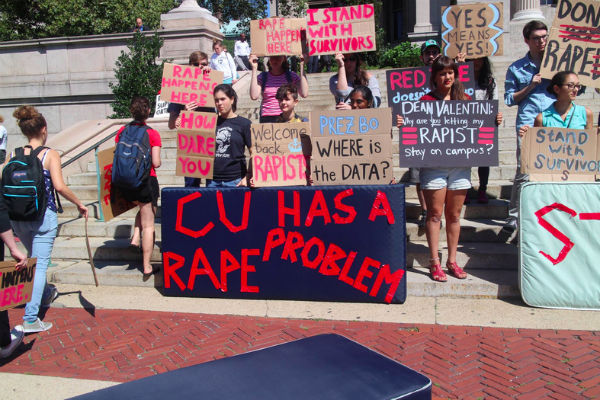
Please, make sure you are taking care of yourself and each other while you do this. It is hard to be a campus activist on top of a full course load, other activities, jobs and attending to your other needs. It can be easy to put campus activism before everything else, but this can take a serious toll on your mental and physical health. Self care is necessary and important to avoid burnout or break down. It’s okay to miss an organizing meeting or a panel or an action because you need to go to the gym or take a nap. It means you’ll be able to show up the next time. If doing art and/or physical activity are important for your mental health and clarity, it’s okay to make that a priority. And encourage others to do the same! Pick up the slack for each other.
Be aware of micro or macroagressive dynamics in your own queer spaces
Fucked up dynamics that perpetuate racism, homophobia, classism, transphobia and transmisogyny, ableism and sexism will always creep up in college friend groups, organizing groups, student orgs and classes. Your insular queer community and humanities classes are not immune! Make an effort to acknowledge and resist these dynamics. Listen to each other and respond accordingly.
College and MONEY
Y’all! College is expensive! Pretty often, it’s prohibitively expensive. Tuition is no joke, and it’s likely you will, in at least some way, shape your student life around keeping your financial situation stable, whether that’s making sure your loans and grants are in order, or working a full-time job on top of your studies.
Financial Aid and Long-Term Planning
It’s really important to understand your financial aid package from your school, and to know what your debt will look like after graduation. That can feel a long way off if you’re just starting your first year, but it’s worth putting in the time to make sure you have the best possible option. “I received financial aid in the form of many federal student loans and parent loans,” Yvonne said. “I had a part-time summer job and a few contract writing jobs while in college to help me offset some living expenses and to save for study abroad however it wasn’t enough to make a dent in the tuition and costs I racked up. I urge you to really read into the different loans and figure out what you’re actually borrowing and what that number will look like once you graduate.”
Your college financial aid office can help you make sense of what your financial aid package means, and they can also help you identify make the best choices about the loans and grants available to you. Yvonne also had tips for maximizing savings on looking beyond your financial aid office:
“The thing you have to remember is that college is a great investment but you should definitely find ways to make your degree as cost-effective as possible and limit your borrowing only to what you absolutely need. Also there’s just a shit ton of things your university offers that can help you offset living costs like free food, entertainment like concerts and events, student discounts at stores and restaurants, etc. Check out websites like FastWeb and apply to scholarships, even little ones. You can check with your major’s department and find out if they offer any scholarships for current students. I know it’s hard work to do this with a full course load and your social life and whatevs but I promise you’ll be happy when you can pay off your students loans in a few years instead of eternity like me.”
Jobs
There are various options for working while you’re in school, including off-campus employment and work-study jobs on campus, each of which have their pros and cons. Work-study is typically offered as part of a financial aid package, which generally means it’s tailored to your financial situation and designed to be balanced alongside your academic life. It’s also often possible to find work related to your major or extracurricular interests, and if you can get paid to do something you’re passionate about, like being a student assistant in the Women’s Center or as a research assistant for your physics professor, that’s awesome. However, it’s important to note that your work-study hours and pay are based on what the school thinks your needs are, so if you have additional expenses that your school assumes you don’t have, for example if you support your family or have out-of-pocket healthcare costs, work-study probably won’t be enough.
It’s always an option to seek employment away from your school. Chelsey worked 40+ hours a week while going to school full-time to supplement the scholarships she got from her school. She said,
“It was ROUGH. I’m not going to lie. The only way I kept my head on straight was to make lists for school, work and home. It’s important to make study and homework schedules to ensure you are going to have enough time, as well as allowing yourself some time to spend with friends and on yourself. It is easy to overwhelm yourself, but if you try and keep things organized and on a schedule, it is much more manageable. Also, Red Bull. Lots of Red Bull.”
Riese worked 20-30 hours a week at Macaroni Grill while attending the University of Michigan full-time, and she pointed out that if you figure it right, you can kill a lot of birds with the stone that is your job:
“I intentionally got a job a 15 minute drive from campus ’cause I didn’t want to serve beer to kids I knew from class, or, worse, work at a place where my non-working friends were hanging out and having fun while I was working. I also wanted to get away for a bit and serve pasta to families. So it honestly was a nice mental and physical break from school, plus it was an active job so I got some exercise as well. And they gave us free food!”
Riese also pointed out that strategic scheduling can be key:
“Get a job that enables you to work and make money during time periods when you probably wouldn’t be studying anyhow — e.g., Friday and Saturday nights, summers, and winter break. If you’re at a big state school and don’t like football, you should really be waiting tables — I never attended a game, but those were the busiest days at work! I was also very realistic about whether or not I could plan on doing homework AFTER a dinner shift (I couldn’t) and planned my life accordingly. Also my friends would come in and sit at my table so I’d still get to see them. I’m pretty anti-social though, and I didn’t really like “the scene” at Michigan, so it wasn’t a big deal for me to have to give up my social life in order to work. It was almost a relief. And if I really wanted to go out, college parties don’t get started really ’til 11pm anyhow, so I still could! I just smelled like olive oil. Dry shampoo, febreze and cologne would be my advice.”
There is no magic wand to wave to magically have enough time to be a full-time student and work a full-time job and have a social life and do whatever other extracurriculars you’re interested in. However, there are places where it will be easier to do this than others. As Riese said, “I learned quickly that UofM isn’t a very work-friendly school, despite its size and the diversity of the student body. Almost all my co-workers went to Eastern, a less expensive and selective school one town over, and I was amazed by how their class schedules seemed catered specifically to people who worked full-time while in school.”
Juggling a job with academic work is definitely a challenge, but being financially prudent is really important, especially when looking ahead beyond college. Generally, challenges you face in college will be resolved relatively fast. Debt is not one of those things. Do what you need to do and don’t be afraid to prioritize it! Your friends will come visit you at Olive Garden or at the checkout desk at the library or during your office hours in the Women’s Center. Caffeine is readily available in many forms. Chelsey also wants to say, “Forgive yourself if something falls through the cracks, it’s all gonna work out in the end!”
Transferring or Dropping Out
I hope your college experience is fun and also challenging in a satisfying way that lets you know you are learning and growing.
Sometimes, there’s a reason why you might decide you need to switch schools, or even leave school for a while, partway through! There are so many reasons why college might not be right for you, or maybe your specific college isn’t right for you. Maybe something during your childhood really fucked you up and you need to take a pause from school to sort some things out. Maybe you aren’t going to be able to sit still for one second in a lecture hall until you’ve hiked the Appalachian Trail. Maybe you or a family member has a health thing you need to prioritize. Or maybe your school is just really fucking expensive and you don’t feel like it’s worth the thousands of dollars of debt you’ll have, after all.

Riese, Mey, Nikki and Anna all transferred. My friend Molly transferred. My first year roommate thought really seriously about transferring but ultimately decided not to. Riese left Sarah Lawrence after a semester and transferred back to the University of Michigan where she could pay in-state tuition and not go into massive debt for a private college she didn’t love. “I wasn’t necessarily in love with Michigan either,” she said, “but at least it wasn’t putting me into debt.” Anna spent two years going to school at the University of Alaska in their hometown of Fairbanks, before transferring to art school away from home. They said,
“So I transferred and got into a lot of debt, which I don’t really recommend, but now that debt is so large it’s not even a real number that I can fathom and I had a really great time at art school. The bigger city challenged me and forced me out of my comfort zone and I can say it changed my life for the better. Feeling stuck and stagnant in school is a real feeling, but you don’t have to actually be stuck and stagnant. I think it’s better to make a change than have that feeling for four years straight.”
Nikki started at community college and then to a bigger school after two years:
“I did two years at a community college near my hometown. They did not have on-campus housing; it was a 2-year college to get your associates. I went this route because being 18 I had no idea what I wanted to do. I had very low self-esteem and high school didn’t help because I always felt stupid because the style of learning just didn’t fit and I always struggled. I could go to school, work my part-time job, and live at home.”
If you don’t want to transfer, you can take time off to work or travel. You can pursue something else. Leaving college is definitely not a decision to make lightly, and it definitely might not be easy, but it is a thing that can be done. There are a lot of pressures to do college right after high school, and then do the whole thing in one straight shot. Sometimes we can’t do that, or don’t want to. That’s okay.
Mental Health
Your mental health is important. Please, please do what you need to do for it. Find out the resources your school has available. There may be a counseling center where you can go to speak to a therapist. There may be peer or administrator-staffed hotlines that you can call if you are in crisis or need confidential support with a difficult issue. These resources are there for you to use! No problem is too small to seek out their help.
At some universities, the health center and/or disability services center can help you with academic accommodations for mental illness, sometimes including anxiety and depression. It’s worth contacting them and finding out what kind of support they may be able to offer.
You may also come to a point that in order to work through your mental health issues, you need to leave your school either to go home or to go somewhere else, even if that messes with whatever plan you might have had, even if it means you won’t graduate on time, even if it means leaving your dream school. “Don’t be afraid to prioritize your mental health over going to your first choice school,” Mey said. “I went to [college across the state from my hometown], but I was depressed and really suicidal and since it was in a new city, I had zero support system. So I transferred to Idaho State in my hometown and even though I was still depressed, I had a support system there.”
Changing Your Name and Pronouns
Starting college can be an amazing moment to start using a new name or pronouns. Policies vary school-to-school, so it’s worth checking to see if your school has a set policy for changing names and/or gender markers. Lambda Legal has an FAQ about this process and the legal obligations of your college to comply with your request.
However, even if your college is willing to implement your name change, that doesn’t mean it’s going to be simple. Lii changed their name in their junior year, and said, “It wasn’t the worst but also not the easiest. I had to give [the college] various legal proofs of my name change, which was hard and expensive. I remember having to inform various entities at different times because there was no way of changing my name identity in the entire system at once, I had to go to [every office] separately. I still was running into access barriers occasionally in my senior year (like niche library/research privileges I couldn’t log into).”
On top of navigating the administrative side of their name change, it also came down to Lii to explain how they wanted professors to refer to them.
“What I ended up having to do was send individual emails to professors or employers or others disclosing information about my name and pronouns. By the end I felt like I had gotten it down to a science, but it was tricky figuring out who to disclose to and how to make the ask, especially when experience has dictated that it is often more trouble than it is worth (for me anyway) in terms of confusion, embarrassment, shame, awkwardness, and creating distance between myself and the adult in question. I made different pronoun asks of different professors depending on how I gauged their ability to use the one I preferred. By the end I defaulted to ‘he’ pretty often because professors, even ones who liked me, are incapable of retooling their hard and fast academia grammar.”
Mey pointed out that it can be really helpful to reach out beforehand to people who might have your old name on a list, like your professors or your RA. Email them ahead of time to let them know what name and pronouns you go by. That increases the chance that they’ll mark that down and just go with it, before they meet you and briefly associate you with the wrong name. Chances are pretty good that your RA will put a sign with your name on your door before you get there, so letting them know ahead of time what name you go by will help the people you live near get to know you by the right name as well. (Also, just a note if you are reading this as an RA or RA-type person or a professor, please enable and empower people to determine what they are called – give people a chance to introduce themselves and their pronouns to everyone in your group or class.)
On Being an International Student
by Fikri
Culture Shock
Culture shock AND reverse culture shock are real things, so give yourself space to feel unsettled, displaced, or just plain upset. Sometimes it is hard to feel like your feelings are legitimate because of the immense privilege that is associated with studying overseas. They are legitimate, just don’t be obnoxious about it. Especially on social media because you will regret that shit a year down the road when your new and shiny place away from home gets significantly less new and shiny. Don’t ever use the word “quaint” to describe anything in your hometown/country in front of people in your hometown/country (or maybe just in front of anyone, ever) because you will deserve whatever comes your way for it.
Visiting and Staying Connected
It is okay to want to visit home. It is okay to not want to visit home. It is okay to want to Skype your family regularly. It it okay to not want to.
Seeing the Sights
Get out of school/campus more! Honestly the only thing I regret is not doing more stuff in the cities I lived in, even the tourist traps, because being a resident, even a temporary one, allows you to experience things so differently (and often more cheaply) than a tourist ever could. Exams/assignments are always happening around the period when the best stuff happens, but yo, in the future you’re gonna remember like zero Plato and a lot more whatever else you did.
Build a Support System
You’re probably going to have to work three times as hard as everyone else to build a support system around you, especially if you’re finding it hard to adjust to cultural stuff (e.g. drinking), but you have to do it. In-person support is important. You cannot actually survive off of four years’ worth of Skype calls with your long-distance girlfriend. (I have tried a lot.)
Going Home
If you’re planning on going back home after university, it’s really important to make sure you have things/people to go back to. It’s super tempting to cut everyone off now that you’re a million miles away — and it does make a LOT of things easier, and I have done it often — but you don’t want to have to start from scratch twice. (And it will be starting from scratch, because you can’t take for granted that things will stay the same when you’ve been gone.) Volunteer work both at home and overseas was really important, because it surrounded me with people who cared about the same things as I did (even though we often came from completely different places) and helped me start build communities/families that really mattered to me. Actually volunteering probably helped me get through everything I’ve listed here. Also meeting people on/from the internet.
How do you feel? Overwhelmed? That’s okay. You are a resilient person and you will figure out what you need from college and work towards that. Plus, you just read more than 8000 words! Did you know that? That’s shorter than a lot of the things you’ll need to read at college, but longer than most of the papers you’ll need to write.
My parting words for you are strictly practical advice: get a tiny stapler and keep it in your backpack. Inevitably you will have to print papers immediately before class, and the last thing anyone wants in that situation is to have a stack of papers with nothing to hold them together. If you have a stapler in your backpack, you won’t have that problem, and then you can also be a hero when half your classmates need to staple their freshly-printed papers, too. Maybe also put a bottle opener on your keys for a similar reason.
Good luck, all of you! I hope you surprise yourselves in the very best way. Please leave your own tips and stories in the comments!




Comments
Going into my last year of college, I wish this had existed a few years ago!
I could write a whole other very long post JUST FOR YOU, but for now I shall just say, good luck, enjoy it, and focus on what is important to you!
Also if you’re writing a thesis or doing a senior project, pace yourself!
Good luck!!
I am writing a thesis! It is on the history of content regulation in public school sex education in New England over time (very broad, yet very narrow). Thank you for the good vibes fellow Maddie!! <3 <3
this is all such A++ advice. I went to college for 5 years (yay extended internship programs – read: kill me) and it was overall a terrible experience because of the politics involved in my school and program. On that note, I hope literally everyone’s college experience is better than mine!!
On the point of coming out, you do you to make yourself comfortable and at home in your college life! But keep in mind that college is a time of change for everyone, meaning if someone you really want to be friends with is less than open to the idea of a queer friend, give it some time, so long as you feel safe and confident in their ability to grow and change.
My roommate for all 5 years and current-BFF came into college with no knowledge of queerness and no friends in that demo, and was generally rather weary/phobic of the community. I didn’t come out to her as bi until our fourth year of college together because of this AND because our previous toxic friendship with a terrible girl who happened to be a lesbian. Her orientation of course was completely separate from her being a terrible person, but it reinforced my BFF’s confusion and fear of the queer community. When I finally came out was when our relationship really went from BF to BFF, and we’re getting ready to live together again as young professional adults in LA. Turns out she’s not even straight anyway!
Moral of the story: don’t judge too quickly, give people time to grow into their college years just like you will.
yes yes yes. i think we all enter college with some views and opinions that we cannot believe we ever held by the time we graduate.
being 17/18 years old really gets the best of all of us sometimes!
Thank you so much. I moved in to my school for freshman year early last week and it’s been so hard to come from a high school where I was so out I could have run around campus shouting “I’m gay” and no one would blink to a school across the country where I have almost re-closeted myself. My roommate and I get along really well but based on her comments she and the other people we hang out with are all straight and consider me to be so as well. I make a lot of noncommittal statements about it, and frankly coming out again is a stress I don’t need on top of my rigorous music major schedule. This welcoming dinner for the pride club is tonight, though, so I am hoping I will make queer friends I really click with.
I really had almost forgetten how hard the combination of gayness, severe social anxiety, and depression can be until recently and this is so exactly what I need to keep me together. I had been hoping AS would do a big post for this <3 thank you thank you love and kittens
I relate to this so much!! I hope you find your queer family and feel comfortable and supported and have the best time. Freshman year is so special <3
One thing I would say for those who are out-and-proud is to NEVER assume you are the only queer person in a group. I didn’t realize I was gay until the last semester of my last year of undergrad, so when I entered into grad school I was still struggling to figure out how to come out to my friends and family, much less my school colleagues. One time we were all waiting around and chatting, and one of my classmates who is obviously queer made some comment about how we were all “straight women who wouldn’t understand blah-blah-blah…” I can’t remember the particulars because this hurt so much. My gender presentation is pretty mainstream and feminine, so no one would look at me and assume queerness. That because I don’t look or act a certain way, I am denied an identity that has become dear to me. I would have thought that this person, of all the people there, would understand how sensitive this issue is for many of people. Maybe it was wrong of me not to call her out in the moment, but I wasn’t comfortable with doing it.
My advice is to be sensitive to the fact that everyone’s situation and experiences are different, especially when it comes to gender and sexuality.
TL;DR–avoid making assumptions about people.
all the agreement to this ^
This is a great point!!
This advice is so on point!
Quick suggestion r.e. alcohol: Folks throwing some sort of shindig should consider putting a note on the fridge door that validates attendees’ drinking choices.
Something like: “Drinks in here! Be safe and know that we love and support you, whether or not you choose to drink tonight.” I saw this at a few college parties and it made me feel safer and better about my choices.
This is so sweet! On my friend’s 21st birthday she had a similar sign, also inviting people to hydrate and eat snacks.
I’m glad for the comments about ‘your local LGBT school group may not be a good fit.’ Mine were never a good fit and I felt ‘not queer enough’; it was basically a hook-up scene or a bunch of gay cis guys dominating the group dynamic in an noninclusive way.
My queer scenes ended up being online (hai AS) and I can also recommend science class, sports, and the local independent bike repair shop.
Any advice for commuters?
Challenges I face are:
– I know no one
– It’s an extremely rural & uncultured U. Like, no one has even heard of Foucault. I don’t think I want to know anyone.
– NO LGBTQ+ community, organizations, anything. It’s like no one here even knows that exists.
– Group projects!!!
I was not a commuter and my school was not even a little bit tailored to commuters, but I have a few ideas. The first is, like Jamie said above, don’t assume you’re the only LGBTQ+ person there! I am 100% positive you’re not. And since you know no one, there’s no way you can know! Your task now is to find them. And don’t write people off just because they don’t know about Foucault, either. Foucault knowledge is not a prerequisite for having something valuable to bring to the table.
As for the dearth of community or organizations – you can create them! It can be something super low-key, like a lunch meetup in a quiet corner. Flyer around about it, and maybe only one or two people will show up, but that’s a start!
As for group projects – someone else needs to weigh in here, because I never got good at them.
Google docs have always been an invaluable group project resource for me – if you can meet up at least once to delegate work among the group, sometimes you can then do the actual writing separately and upload it to a shared file.
Yes, of course I know you’re right!
I just feel extremely isolated. I’ve tried to create clubs. I’ve tried making friends but I’m an older student, not into partying, & I just don’t relate to anyone. I created several clubs/organizations outside of school, just in the local area, that no one ever goes to. It’s been a lot of work and hasn’t really gone anywhere. I’m looking forward to graduating, exploring the world, and hopefully finding a place that feels more like a fit. I’ve come to feel that I really couldn’t care less if I make friends at school or not. I just want to get through it at this point.
<3 that does sound really difficult! sending a lot of queer internet community love to you! i’m confident you will find your spot, even if it comes after graduation. i hope someone else chimes in with more suggestions for you, too!
While I’m not/wasn’t a commuter, I can definitely empathize with… almost all of this. As far as group projects go–they’re a bitch, and probably just always going to be that way, but if you are really miserable or being trampled by your group (or alternately, are being left to do the whole thing by yourself), I would absolutely talk to the instructor about it–especially if you have some serious anxiety issues or something, you might mention it before it even comes up (and a syllabus can be really helpful in letting you know IF that will come up). And if your group is just sort of lackluster or disorganized or apathetic, you should feel free to step up and appoint yourself In Charge if that’s something you feel capable of doing; and if you end up having to do EVERYTHING: tell your professor. Or, if it’s reallllly bad, only put your name on it (and explain to your professor why you did, outside of class).
There might not be LGBTQ+ organizations, but there almost HAS to be an office of diversity or inclusion or something along those lines that you can check out/investigate, or even make suggestions to.
The rural thing, though: I’m from Middle-of-Goddamn-Nowhere, USA. I understand both the feeling and the bleak reality of this. But to switch on my “optimist” light for a minute (and at the risk of sounding like a bitch): I was the exception to the rule. Yeah, there were loads of things I knew nothing about going into college that most of my peers seemed to know. I didn’t know who the fuck Foucault was. I more or less looked like standard issue Small Town Person. But there will be at least a handful of smalltowners like me who are smart and who are passionate and who feel exactly like you do and who will be lost and isolated. But you can find them if you pay attention–the ones who answer questions eagerly or insightfully and who respond/react to discussions in ways similar to you. And they’d probably be delighted if you went up to them after class and said something like “I’m glad someone else thought…” and strike up a conversation and potentially make plans to study together or something later. (Also, those are the same kids who are most likely to seem Totally Straight Hetero Cis Person and Not Queer At All and to be totally clueless about queer anything–because their whole lives have been in a bubble of homogeneous and unaccepting and actively ignorant tiny communities. So there’s a chance they might be dying to meet another Not Straight Person.)
Definitely wish this had been available when I was in college. I distinctly remember sort of disliking classes in general in my first two years of college. I was really a sort of the lazy type. HAHA. I’m surprised that I went on to excel in my 3rd and 4th year of college. No honors but I really brought those grades up. Ex: I went from getting 76 in basic nursing subjects to getting something along the lines of 89 for major nursing subjects.
Making friends was really hard because 1. I also didn’t know anyone, 2. I was SUPER DUPER AWKWARD in college 3. Half the class seemed to know each other from high school.
I guess it didn’t help that I didn’t have many friends in high school either.
The LGBTQ community was also super non existent in college..I THINK. I’m not sure. I was really such an introvert back then. I think I’m just really really grateful that I eventually found friends who didn’t judge me and we all loved/still love each other. UP TO THIS DAY <3
In a way I think finding out that my mom had breast CA made me grow up. For those 4 years of high school and 2 years of college she was with me abroad in the Philippines. When the time came that she had to come back here in the USA to get treatment my inner self (???) knew it was just time to grow up and be more responsible. And grrrrl did I grow up fast. Sure I had freedom but then I had to keep in mind that I had other things to look out for and think about.
Now partying…that's a whole other story. Up to this day I tell people that I really think I ruined my 21st birthday by drinking SO MUCH from 18y.o to 20. HAHA. I literally felt like I'd missed some sort of rite of passage. Partying is fun but I just hope you're all careful and safe with whatever you do. Partying with the right people just makes for an even better time. And I'm happy to say that the people that were my closest friends in college are still my closest friends today.
Also when I first found out I was literally being sent to the Philippines for high school and college I was super duper mad at my parents. They were sending me to a place 7000 miles away where I wouldn't know anyone and I would be made of fun of because of the way I spoke Tagalog. But now I thank them because not only would I have not met Christine I would more than likely have student debt.
You are a treasure trove of wisdom and experience!
But Maddie is still the best
I could have really used this advice eight years ago when I started college. This is perfect. Also, I just want to reiterate what was said about going to the student disability center and talking to a counselor who will get you accommodations. I didn’t do this until my fourth year of college, but I wish I had done it as soon as I stepped foot on campus. If you have any kind of mental illness, even if you think you’re “not sick enough” or that what you have isn’t a disability, please talk to someone. My counselor was able to get me accommodations that I didn’t know I needed, but I really, really did.
Also, Freshman year I had a horrible dorm experience, and my roommate was SUPER homophobic. There’s a staff member in the dorms who is above the RAs and is responsible for your safety, but I forget her title, but I told her about my roommate and she was able to move me to a completely different dorm RIGHT AWAY. It was amazing.
Good for you getting what you needed from those residential life people! It probably works a little differently at every school, but I think this brings up a super important point that your RA is part of a bigger reslife team of people who have more power than your RA. Like you said, they are responsible for keeping you safe in your living situation – it’s worth knowing who these people are in case anything comes up.
OH FOR THE KIDS WHOSE PARENTS DIDN’T GO TO COLLEGE:
Find each other. There’s a big invisible cultural gap between folks who are navigating this themselves vs those that grew up in a higher-ed family type atmosphere, and until really recently, schools didn’t track or provide resources for these students. The default is your teachers will assume you have parents who went to college and grew up knowing the unwritten rules of the culture of academia so it can be very difficult and frustrating to have to work around that.
http://www.nytimes.com/2015/04/12/education/edlife/first-generation-students-unite.html?_r=0
If there are a lot of little differences about you, esp invisible differences, such as being queer and being first gen college and being from a low-income family and having social anxiety, it’s v easy to get isolated and feel like you’re all alone. If your school guidance center doesn’t have a support group for first gen college kids, maybe you could start one? Or looking into it could lead to meeting interesting people and possibly faculty that walked the same road and could offer mentorship. A peer mentorship program is really great too; a lot of schools have some sort of program for a successful first year of college and that could be a good place to tack on a first gen college mentorship program.
That way you can put the fact that you’re first gen college on your CV, so it’s no longer an invisible part of your story to those who evaluate you.
Thanks for this great advice, Rey!
I can’t remember if I already “liked” this comment/post, but… I literally had no idea that anything like that existed, and I hope that more places incorporate the first-gen collegiate group idea (like they don’t already know and could easily organize something like that, since they’re always asking about your familial college history and give scholarships for first-generation kids)–it would have been such an incredibly huge help to me, and a few other people I knew who weren’t part of the standard Liberal Arts University demographic (my school was mostly self-important and entitled white upper-middle class private school kids… of only I’d known anything about the world before I’d gone to college…) But, yes, my point was: thank you for sharing this great initiative/idea.
Ah man this is great, thanks a bunch Team!
The bit about prioritising your mental health especially hit home for me – in my second year I lost my mind and didn’t tell anyone until all my papers were due and everything was hell. But then I spoke to the course-coordinator and she was excellent and it all worked out. Personally I have to remind myself regularly that people are usually more sympathetic than expected, and that it’s always worth taking the risk and asking for help if you need it <3
This is SO true! I tend to do the same thing…just force myself to go on and not tell anyone about the difficulties I’m having. I’ve recently been learning that, as you said, people are generally a lot more sympathetic than I expect them to be.
I’m so happy to hear this worked out for you!
I just graduated from a small private liberal arts college on SoCal and I have a lot of thoughts about surviving college as a young queer person, and as a student in general:
1. EAT BREAKFAST. Seriously, whenever possible, get some food into your face in the morning. Being in a new environment can really shake up your body and being well fed makes a huge difference in stress management.
2. On a closely related point, figure out how safe/easy it is to smuggle food out of your dining hall(s). At my school it was absurdly easy, to the point that I often stuck canning jars or plastic containers in my bag, surreptitiously filled them with food while sitting at a table in the dining area, and went back to my dorm carrying most of the ingredients for fried rice/pudding/frittatas/sorbet/you get the idea. Even an apple or a handful of dried fruit or nuts from the salad bar toppings area may become the cheap, quick snack that helps carry you through a late night study session.
3. It’s okay to back out of things! As a first year you may attend a club fair and get super excited about ten different extracurriculars, then realize you’ve overloaded yourself. This is fine and a totally normal thing to do! In fact, there is a lot of power in being put in a place where you get to practice saying no and setting boundaries about where you put your time and energy. Boundary setting is a life skill that never loses its relevance.
4. My first year faculty adviser told me to “act like the most entitled person in the world” when it came to getting classes/navigating administrative processes. As much as you can, remind yourself that you deserve to be treated well and get your needs met. If you don’t get into a class you really want to take/need for your major? Show up anyway and talk to the prof after class about why you want to be there. I and almost all of my friends got into at least a couple of our classes by the “just show up and prove your interest and eventually the prof will put you on the official roster” method.
5. Try not to overload yourself with similarly formatted classes at the same time! Not everyone has an option here, because some programs are stricter in what you need to take than others, but still keep it in mind. If you have four classes that all assign lots of long papers, you are going to start to dread sitting down to write a paper because each one is just the start of a never-ending stream of written assignments. If you have four classes that all involve lots of lab work, you’re going to get really sick of filling out data sheets and doing lab writeups. If you have one class that assigns mostly papers, one that is mostly lab work, one that’s discussion and short answer focused, and one that involves art or physical movement, each class is going to feel like a refreshing shift from what you did last. It also lets you meet people in multiple environments and think about what class style helps you learn the best.
6. Think about what kind of person you want to be in your life as a whole, not just who you want to be as a student. After attending ten years of children’s theater programs as a very small person, I stopped doing theater altogether in high school because AP classes swallowed my free time, and I continued that trend into college. Then it was suddenly my senior year and I realized that most of my chances to do college theater had flown right by me. I swore to make acting and art more of a priority because I missed it so much, and ended up being in a student-produced play at the same time as I was working on my thesis. It as intense and exhausting and I don’t regret it for a second – when thesis work was weighing me down, I knew I had a hilarious group of people that I’d get to play theater games and run lines with as soon as I finished my writing for the day. Try to make time for the things you love that aren’t necessarily your academic focus. Often, they’ll be the times you remember the most fondly.
slow clap for all of these things.
My advice is simple. Do not sleep with all the lesbian upper string students at the neighbouring music conservatory. It looks like your trying to collect a whole quartet and is more than a little regrettable.
Solid piece of advice right here.
I learned a bit of the hard way, but don’t make assumptions about people based on where they are from or about the neighborhood itself. I’ve been wrong at least once about assuming something about a neighborhood in the county I went to school at. I’ve also had people assume certain things about me due to my zip code. It kind of sucks cause I had a roommate trying to hit me up for cash assuming that because I’m from a particular neighborhood, and that my HS had a fancy basketball court, that I can spare him a few $$ for shoes and booze money.
Also, make it clear to your roommates about the cleaning situation. Cause I’ve had roommates who were mess and never cleaned, and others who were totally about a neat apartment. Oh, and save your cans, bottles, and other glass items for recycling. It’s great for the environment, and if you are in California you get 5 cents crv tax back for recycling, which can be used towards anything you want(in my case it was for groceries, or communal liquor).
Yes! It’s really impotant to establish common rules and expectations when living with people!
Thank you guys for this! I’m transferring to an out-of-state school next month and moving up there this week. Finding off-campus housing that met my criteria (decent parking, in my budget, close to public transit, a lease and not a sublet) was a steep learning curve. Finding people willing to room with you when you can only do video call is DIFFICULT, and no matter how much they like you, they will always prefer people they can meet in person over you (not like I can blame them).
I made the mistake of attending university straight out of high school when I was extremely depressed–I thought I had to go straight into higher ed or I would be a lazy failure. I dropped out within a month. After two years of getting my mental health together and having the privilege of living with my parents, I signed up at the local community college. It wasn’t ever something I thought I would do, and while attending a small school in the rural, conservative South wasn’t exactly a dream experience, I don’t at all regret it. I ESPECIALLY don’t regret the money I saved going to a in-state CC having my tuition paid by pell grants.
I’ll be racking up some debt going to a public out-of-state institution this year. My plan is to qualify for residency so I don’t have to pay it next year, too, or for a third year if I need to stay in school for five years total.
Good luck in the new school year, everyone!
Good luck to you!!
For what it’s worth, my group of queer friends sort of materialized while I wasn’t paying attention. My freshman year I was desperate for a group of like-minded people, and met a lot of odd (although not overly horrible, just not queer) people as a result. My sophomore year I just sort of rolled with whatever school decided to throw at me, and my junior year a bunch of people who had become my core group of humans started acknowledging their identities, albeit quietly. To date about half of the people I hang out with have come out as some stripe of non-hetero.
Long story short, my best advice is to be proud of your identity, and passionate in the things you care about.
(And if you’re reading this and just starting out at college/university, have fun! The years fly by, and all too soon you’ll be graduating.)
This. My freshman year I lived on the math and science floor (so basically all huge nerds) and almost half of my friend group isn’t straight. We all met because we sat in the same corner in calc class.
That being said, there aren’t a lot of women in science so this is how I ended up with mostly gay men as friends, haha.
Ahhh this is so wonderful! I’m going into my third year of college after switching my major last year. While it’s disappointing that I won’t graduate in 4 or even 4 1/2 years, I’m glad I did what I did. I may even get to minor in English and take some LGBT lit courses while I’m waiting to get approved for my upper level teaching courses.
It took me two years, but I think I’ve finally gotten this college thing figured out. I’m going back to KSU on Saturday and I don’t have that awful feeling that comes with being on the edge of an anxiety attack that I had last year. I finally have a work-study job that I love in place for this year, my financial aid is finally on track, my roommates aren’t asshats, and even though I’m sure this year is going to be stressful, I feel like I can handle it.
Hope everyone else is feeling ready and excited for school this year!
Also, if you attend an institution that has grad students who are your TAs/teaching your class, don’t be afraid to talk to them. Back when I held office hours only one or two people ever showed up (unless it was the day before an exam) even though I basically told them I would walk them through their problem sets and lab reports! I also pretty freely gave out advice about summer internships, etc. I really don’t understand why nobody comes to my office hours because I’m only like… three years older than most of my students and super non-threatening.
Yeah!! Office hours are so great.
I think the only advice about college I feel qualified to give (as someone who graduated in ’13) is that it really is OK to fuck up. You are growing and changing and you will probably make mistakes and that is truly OK. You will come out OK. I made TERRIBLE AWFUL choices my last two years but you know what? I am stronger for the trials I faced and a better person for it.
Also don’t be afraid to seek mental health. It’s super helpful.
I can’t emphasize how important it is to get out of your dorm room and meet people! I was extremely shy/anxious/homesick my entire first year of college, but after I got into a Model UN class and became friends with those people, I felt a lot better in a many ways. I’m still good friends with a lot of those people, and they were all really supportive after college when I came out as bi.
I also tried my College Dems group which was…okay but not my scene. A lot of drinking, partying and marijuana. I’m not into any of that. And there was a lot of drama with the Eboard members.
So really, try out different clubs and activities until you find a group of people you feel comfortable with. Once you take more major classes, you’ll start seeing the same people over and over again and I highly recommend meeting up with them to study/compare notes/just talk! Of course, not everyone will be a great student so make sure they aren’t leeching off of all your hard work.
Posting my community college tips to the best of my ability because the wee disclaimer inspired me to do so, but some of this can def apply to four year colleges as well.
Community colleges are a diverse experience possibly more diverse than 4 year university and colleges. In some places they out perform and out serve local universities and in others they’re basically trade schools. Some people call them 2 year colleges and depending a multitude of factors this is sometimes very true. Other times because of budget cuts and restructuring something that should take 4 ovesters will spill into more because a needed course is only available for just Fall or Spring term ect or layers of prerequisites.
Basic tips:
Learn the hours of administrative offices; be they student services, admissions, office of disability services if you need that office learn their hours
Learn the deadlines and the start times of enrollment and anything you need to may need to apply for like financial aid, VA concerns, book store credit or grants
Finish off your gen ed requirements before getting into the heavies of your chosen course of study
Get a good picture of your prerequisites and electives
Consider burn out potential with your course load, cramming 18 hours trying to finish faster only to fail and need to retake things will slow you down more than taking only 12 hours will.
If there’s a meal plan get a good scoop on the food before buying it
If you bring a microwave dependent meal with you be aware of what other food options are available at the hours you eat in case someone accidentally murders the microwave
Understand what ever clubs you join those people could be gone and it could disband because key members finished their course of study so get their numbers and shit if you want to keep contact
If you have a disability learn the school’s disability services policies ect and fucking use them, you have the right to do it and there is nothing to be ashamed of
If you’re at community college for transfer credits to finish at 4 year but haven’t decided where you’re going to transfer yet that’s OK, but try to narrow it down so you can match what will and won’t transfer (especially gen ed things)
If you’ve narrowed it down try to learn the transfer rep of where you’re trying to transfer, some 4 year schools will try to bog you down with useless remedials
Labs available? Like a math lab or english lab with tutors or something and plain open general student computer lab, use them for there are likely fees for them you’ve paid for in your tuition
A grant you could apply for and possibly get? Get grrl, GET IT.
Just the remember the start time/deadline time thing I mentioned at the beginning, process time and the application process can be a lengthy pain in the ass.
That’s all I can think of at the moment other than check to see what your local community colleges offer, how they match up to real world application and your needs.
Last but not least, gird your loins when you hear about budget cuts in local government.
Okay, so I haven’t read every word of this yet, but I am kind of a “don’t make the same mistakes that I did” crusader on this topic, and oh-my-god, if you want to avoid /misery/, please please please take this advice seriously. No matter what college you go to, there will be so many resources, and you will not know about them or be able to benefit from them unless you find them (and there will always be more, so you should always be on the lookout for new organizations, updates, etc.)–you will have to investigate the shit out of your school’s website, but you will also have to badger people for information (partly because you can’t possibly read every single thing there is to read online, and partly because in my experience, smaller college’s websites are like 0% helpful)–when I was at orientation before starting my first year, I literally just told people “I really don’t know enough to know what questions, so please tell me as much as you can,” and everyone’s response was just “oh–lol, right =)” which didn’t get me anywhere. ALWAYS ask a question if you have one, no matter what it is or how dumb you think you’ll sound, and always ask for more information, like if someone mentions event or an organization you don’t already know about or a class that sounds like something you’d want to take, or how their campus job is and who they talked to to get it. And this goes for actual classes, too–for the love of god, talk to your professors. Even if you just are too shy/nervous to ask about something in front of the whole class, talk to them after class or before class or go to their office hours or email them–about class discussions, about assignments, about difficulty meeting a deadline, about extracurriculars/volunteering/internships/jobs/events relevant to the class or subject, about how you can learn more about or get involved in a thing, if they could give you some advice about careers/assignments/stresses getting in the way of your performance/burnout/etc., about what resources they know of in campus or near you that could help you with a thing–literally ask them just about what the fuck ever you want or need to ask. Even some personal things are okay–like if you’re struggling with something like stress or mental illness and you need to explain it to them to account for your absences or your difficulty performing well in the course (which you should 1000% tell them about) and they are compassionate and/or concerned about it: take them up on their offer to help you, even if it’s asking if you can come by their office to talk about your life. And if something is stressing you out or becoming an obstacle for you that is related to your college–applying for department scholarships, not knowing who to contact about something, issues registering for classes or just knowing which classes to take or which major to choose, being mistreated by other faculty or staff–then YOU SHOULD DEFINITELY ASK SOMEONE, like a professor. But there are also a lot of other people whose jobs are literally to help you answer all these questions and deal with all this shit–and you’re basically paying their salary, so you’s better just take a deep breath and walk right up to their door and knock on it. RAs, dorm directors, advisors, deans, secretaries, counselors, librarians, orientation leaders, people in the registrar, bookstore people, coaches, tutors, peer counselors, safety officers, organization presidents, the entire disability & diversity & health departments–ASK THEM THINGS. ASK THEM EVERYTHING. TELL THEM THE THINGS YOU NEED TO SAY.
And if you’re in a class that you really like and want to do well in: make time to make that a thing you are excelling at and enjoying and getting the most out of. Don’t just skate by because you can. If your classes aren’t challenging enough, SEE IF YOU CAN TEST OUT, if you can be moved to a different section/professor, if you can be in an honor’s version of the course, if you can take a similar (or totally different) class instead.
Also: TEXTBOOKS–don’t fucking buy them until you know of you actually need them. I know you want to be prepared and everything for the First Day of College, but you will be throwing away hundreds of dollars buying book versions of things that are public domain or that you just plain will not need or that you’ll “need” only once the whole semester and can easily borrow/share from someone or from the library or whatever. And sometimes they want you to buy books that are just too dumb for you, because it’s an intro class and some people somehow graduated high school without having to know the first thing about biology or whatever. And sometimes professors HAVE to list a required text because the administration says so, but on the first day of class the instructor will tell you that it’s not actually a big deal. (And it goes without saying that you should NEVER buy new or from the bookstore if you don’t absolutely have to.)
One last thing: college is about you–your education, your life, your future. If something isn’t working out–whether academically or socially or in terms of your health and sanity–it is okay to change things, or to just say “I need a break.” And better to do so when you realize the need, and not wait until you are suffocating from it.
Oh, and one other last thing: don’t give up something you love just because you don’t think it’ll be cool enough or that you won’t be good enough or whatever other stupid excuse your brain makes up. If you don’t make the tennis team, so what? Play intramural tennis. Play tennis at the local Y or something. START an intramural tennis team. Just find some other people who like tennis and will play with you. If you don’t think you’ll be good enough to get cast in a theatre production, slap yourself in the face and say, “I AM GOOD ENOUGH, AND EVEN IF I’M NOT GOOD ENOUGH THIS TIME, I’LL NEVER KNOW IF I DON’T TRY OUT,” and then go to the audition. Never assume you are less good or less talented or less able or less smart or less funny or less interesting than “everybody else,” because remember how a “C” is actually “average”? The world is bursting with C and D people, even at colleges–and lots of them act like they’re A people. But they’re not, and you probably are, and you should do what you want and not let some asshole make you feel like you have less of a right to be there than anyone else.
This is great and I wish I had had this back in the day! Due to a family crisis began the week before I started college, I dropped out of that university after 3 days, took the fall off, and then went to community college, got my AA, and transferred to a 4-year to finish it and it was the best decision I ever made. Community college gave me the chance to ease into adulthood and explore my interests without going into massive debt and by remaining in my community. So for anyone who has considered community college – or even if you haven’t! – it can be a fantastic, empowering, mental health- and finances-saving decision.
Also so much yes to your emphasis on being able to change your mind at any time about your major and your college and your life direction and just basically everything. I totally bought the myth fed us in high school that you graduate, get a four-year degree, get a career, get married blah blah blah, and I found out that’s not what happens for anyone hardly ever. And that’s okay. I changed majors and schools multiple times and I am a happy and successful human BECAUSE of it, not in spite of it. You can always change your mind. On anything.
I worked for my university and did a lot of major switching, so I have a lot of advice!
If you took APs/IBs in high school, look at the nuts and bolts of what your school gives credit for. You might end up completing many of your core classes before you even start.
If you’re confused/unsure about your major or career path, look up what office handles advising for the undeclared students and make an appointment with them. Also, see if your school offers a class that helps you choose a major – many do.
USE YOUR UNIVERSITY HEALTH SYSTEM. Not just for mental health, but for everything. (this one may be even more useful for grad students).
If you choose to be sober, see if you can find a sober buddy or at least a light drinker. Though I never encountered any judgment, it does feel awkward to be the only sober person if everyone else is super tanked.
Don’t take 21 hours in a semester. Just don’t.
I didn’t see a single high school long distance relationship survive college. Not that this is a bad thing – you’re doing a lot of growing as people! – but you should be open to the possibility that your LDR may not last.
Also, persons entering an Honors program or high school top 10%-ers – it isn’t the end of the world if you make a B, or a C, or a D, or end up leaving your honors program or school. College academics are distinct from high school academics. Just because you’ve experienced a lot of pressure to be “smart” doesn’t mean you’re a failure if it doesn’t work out.
GAY/BI/LESBIAN/QUEER FRESHMEN VARSITY ATHLETES –
I love you all and I have additional advice for you beyond the great stuff Maddie said (and like Maddie’s piece it got pretty long…)
Being LGB on a varsity team can be tough. Take the below advice with a grain of salt – I was a walk on to a varsity team at an Ivy which meant that I didn’t go through the recruiting process and had no scholarship stuff going on. My experience and the experience of other LGB athletes at my school may not be your experience!
1. Coming Out
2. Being queer in a straight community
3. Dating/hooking up with teammates
4. Quitting
5. Resources
Coming Out
I found coming out to my team by far the hardest coming out experience in college. Obviously you don’t have to do it at all (especially if you worry your scholarship might be at risk if you do) BUT most people I know have said that they feel like they performed better as an athlete after they came out.
It’s hard because there’s always pressure to conform to team culture (which is probs pretty heteronormative), it’s hard because you take group showers (!!), it’s hard because it feels like it could be a distraction. I definitely felt uncomfortable coming out until I had proven myself as an athlete.
I know a lot of people (especially those who came out later in college) who sat the team down in the locker room and came out to everyone at once. I def couldn’t handle making myself the center of attention like that. I came out to my closest friend on the team first, and then, using “Freshman Screw” (this big freshman dance), as an excuse, I came out to the whole team. (“Who are you going to screw with?” “Well her name is Rachel.”)
There are a ton of options for coming out. You can also tell a few people and ask them to tell other people if you feel awkward telling everyone. Whatever works for you!
2. Being queer in a straight space
For the most part, varsity athlete culture is SUPER heteronormative (even the varsity teams where teammates are hooking up with each other…) If you’re the type of gay who feels like it’s a very small part of your identity and you are just like a straight person except you like girls, this part will probs be pretty easy for you to deal with.
If you’re not (like me!), I really recommend building a queer community outside your team. It’s extra challenging because being an athlete takes up so much time but it’ll be pretty important for your sanity. Joining clubs is really helpful for that because they tend to have set meeting times you can work into your schedule more easily than hanging out with non-athletes who don’t need to go to bed at 10pm or going to a LGBT party that’s the night before a game.
The more you can bring your team and your queer community together, the easier it’ll be to manage both. It sucks when you can’t feel like your whole self with your groups. Bring your teammates to the LGBT party! Ask your queer friends to watch your games!
Also, push for team social events that (1) don’t involve the men’s team and (2) don’t involve going to frats. There will be plenty of straight people who will thank you for that! You don’t have to go to frat parties with your teammates, but it’s still really important to hang out outside practice.
3. Dating/hooking up with teammates
I know some people are super anti-dating teammates but I think it can be great. I know a ton of really awesome relationships between teammates (and a few complete disasters as well.) Some helpful tips:
COMMUNICATE. omg. be extra clear about your needs/desires/expectations for the relationship.
Make sure you both are putting the team first. You’re teammates first, a couple second.
Be really careful with power dynamics with age and leadership/captain status.
It sucks to have your heart broken by a teammate, but it’s your responsibility to save your tears until after practice.
Know your team culture around dating. Talk to your captain(s) about it.
4. Quitting
It’s ok to quit.
It’s so antithetical to everything about being a good athlete. Good athletes don’t quit. But your happiness is your responsibility. It’s up to you to make choices that make your happiness possible and to take advantage of everything college has to offer.
If you’re miserable freshman fall, stick it out for at least a year. Being a varsity athlete is really hard. It takes up so much time and effort but can be so, so rewarding. Being on a varsity team for four years is an amazing achievement, and there will be tough periods no matter what. But if you’re miserable for a long, sustained period of time and can’t see a way to be happy at college without quitting your team, then you should quit. Quit and be a NARP (non-athlete regular person) or quit and join a club team (join a long line of lesbian varsity athletes who start playing rugby! Best decision I’ve ever made.)
You don’t live for other people. You live for you.
(Obviously this is complicated if you’re on an athletic scholarship!!)
5. Resources
GO! Athletes is amazing as is the You Can Play Project! I def recommend checking them out.
http://www.goathletes.org/
http://youcanplayproject.org/
Also, your school might have a LGBT athlete organization. Join it or start your own! I did, and it was incredibly rewarding. There’s definitely a lot of work to do in eliminating homophobia in sports, and there are a lot of people willing to do that work.
If you’re worried about homophobia on your team (either from teammates, coaches, the men’s team etc), I definitely recommend getting some people with power on your side – whether they are popular seniors, captains, coaches, athletic administrators, or Deans. Sometimes all you need is a few seniors to speak up to really change a culture. Sometimes you need to involve an administrator to get a coach fired. If you’re not willing to fight those battles, that is so, so understandable. If you want to keep your head down and focus on your training, that is awesome and there is no shame in it. It’s not your job to be an activist proving your humanity. But you definitely don’t have to deal with all your problems on your own, and I guarantee you’ll find some allies somewhere even if it takes a bit of searching.
-CRIES GAY TEARS-
AUTOSTRADDLE. THANK YOU SO MUCH.
I am both excited and terrified about going to college in 3 weeks! All this advice was so so helpful and wonderful, and I feel empowered and more confident with all this wisdom. I could honestly write a novel of my gratitude to you all. Seriously, you guys spent time writing this out…it was so worth it, I promise, you are helping immensely!
Omg Dante good luck!! I’m so happy this is helpful and empowering for you. <3